San Francisco, California
Fairmont San Francisco
Est. 1907 · Beaux-Arts · $$$
A hotel that was nearly finished when the 1906 earthquake gutted its interior and opened exactly one year later as a deliberate act of civic defiance. The lobby occupies the entire ground floor. The UN Charter was drafted here in 1945. The basement Tonga Room does a simulated rainstorm every 30 minutes and has done so since 1945, unbothered by anyone's opinion of it.
I checked in on a Tuesday and stood in the lobby for a solid two minutes before I remembered I was supposed to be walking to the front desk, not just standing there with my mouth slightly open. This happens to people at the Fairmont. It’s not a lobby so much as a civic announcement — marble columns, gilt everywhere, ceilings pitched for a room ten times its actual purpose. Somebody built this to make a point, and a hundred and twenty years later the point still lands.
The point, it turns out, is literally what happened. This building was supposed to open in 1906. Then the ground moved, the city burned, and the people who owned it decided the correct response was to finish rebuilding and reopen on the exact anniversary of the disaster. That’s not hotel marketing. That’s a decision made by people in genuine distress, and it’s the single most interesting fact about a hotel that also happens to have hosted the drafting of the United Nations Charter and a Polynesian bar with a fake rainstorm on a thirty-minute timer. This is not a normal hotel. Let’s get into why.
| 📍 Location | 950 Mason Street, Nob Hill, San Francisco, California |
| 💰 Price range | $$$ — roughly $350–$900+/night depending on room and season |
| ⭐ Best for | Architecture lovers, history lovers, Nob Hill views, special occasions, business travelers |
| ⏱️ Sweet spot | A clear evening, so you get the Nob Hill views before dinner and the Tonga Room after |
| 🚫 Skip if | You want boutique intimacy or a quiet, low-key basement bar scene |
| 📖 Book | Fairmont San Francisco on Booking.com |
Check availability and current rates →
For the wider story of why so much of this city shares the same “destroyed, then rebuilt on principle” origin, our San Francisco city guide covers the 1906 disaster and its aftermath in more depth. We also covered the Fairmont in brief in our earlier San Francisco historic hotels roundup — this page is the full standalone review that piece always pointed toward.
The History Nobody Tells You
The Fairmont was close to finished atop Nob Hill when the earthquake hit on April 18, 1906. The fire that followed did what the shaking hadn’t managed — it gutted the interior completely, leaving the exterior shell standing more or less alone above a burned city. A lot of buildings in that condition got quietly demolished. This one didn’t, mostly because the people who owned it saw an opportunity in the wreckage rather than a reason to give up.
They brought in Julia Morgan, an architect who would later go on to design Hearst Castle, to lead the reconstruction of the interior. And instead of opening as soon as the work was done, they held the date. The Fairmont opened on April 18, 1907 — exactly one year, to the day, after the earthquake that nearly destroyed it. That’s not a coincidence and nobody involved ever pretended it was. It was a scheduled, public statement: San Francisco is rebuilding, and here is proof, on the anniversary, on the hill, in a building bigger and grander than the one the fire took.
The lobby is the physical evidence of that ambition. It runs the entire ground floor of the building, with a ceiling height and decorative scale that has more in common with a Beaux-Arts train station than a hotel entrance — marble, gilt moldings, columns that don’t need to be that tall for any structural reason and are that tall anyway, because the point was to make you feel it.
Then, in 1945, the building did something that had nothing to do with hospitality and everything to do with history. Representatives from 50 nations gathered at the Fairmont during the United Nations founding conference, and the UN Charter itself was drafted in meetings held inside this hotel. The formal signing ceremony happened down the hill at the War Memorial Opera House, which is the version most textbooks mention — but the actual drafting, the arguing-over-language part, happened here, in rooms you can still walk past today. It’s a strange thing to sit with: the framework for post-war international relations was worked out in a hotel that had itself been rebuilt from a natural disaster thirty-nine years earlier.
The guest list over the decades reads like a strange cross-section of the 20th century — Theodore Roosevelt, Rudolph Valentino, and Tony Bennett, who by most accounts premiered “I Left My Heart in San Francisco” here, a song that’s now functionally the city’s second anthem. None of it is oversold in-house. There’s no dedicated shrine to any of it. You mostly have to know to look.
Book your room at the Fairmont →
The Rooms — Real Talk
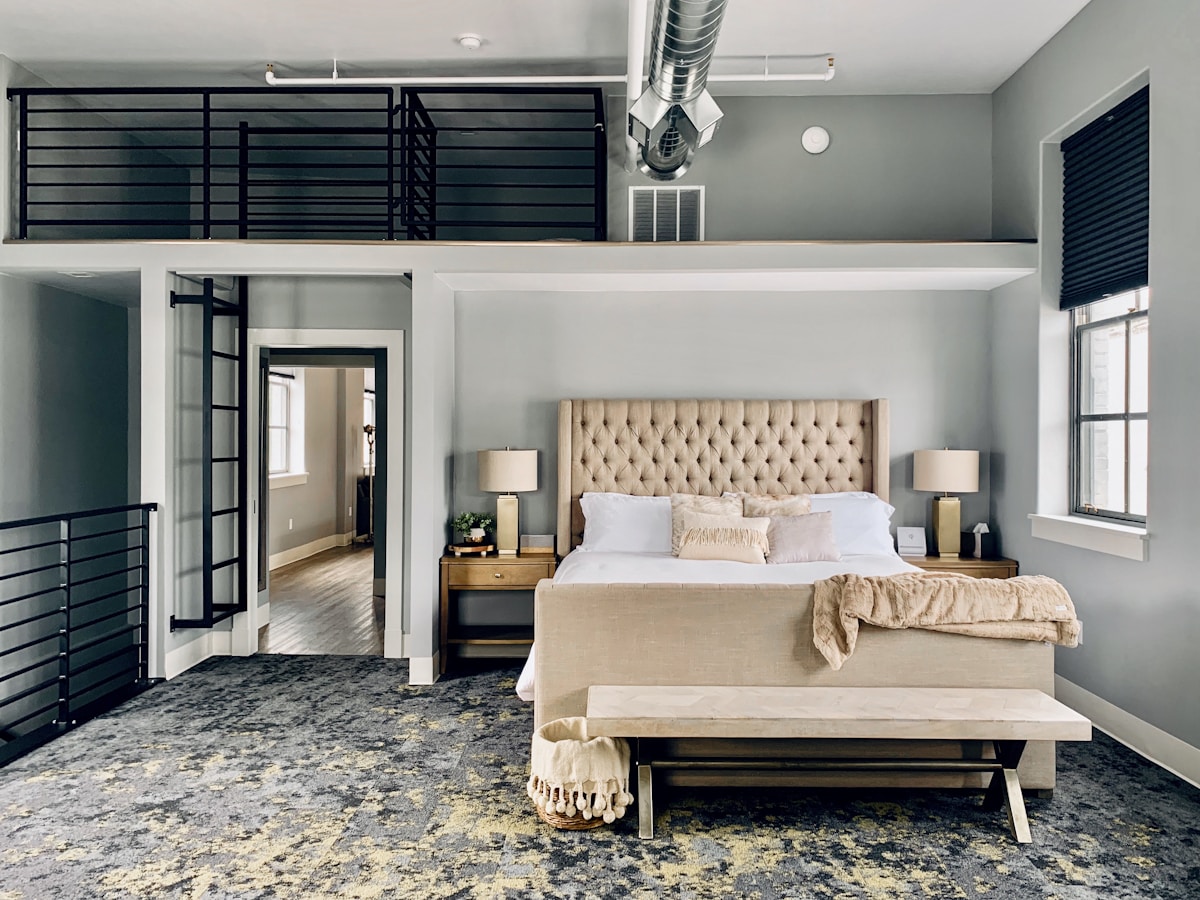
The rooms are good — spacious by downtown San Francisco standards, well-maintained, comfortable beds — and, like a lot of grand historic properties, slightly overshadowed by the public spaces. You’re not paying for the room. You’re paying for the building the room happens to be in, plus the view, which on the higher floors of the tower is genuinely one of the best in the city.
| Room Type | Price/night | Best for |
|---|---|---|
| Fairmont Room | ~$350/€322/£276 | Solo travelers, a base for exploring the city |
| Deluxe City View | ~$450/€414/£355 | Couples wanting more space without the tower premium |
| Tower Bay View | ~$650/€598/£512 | The panorama — worth the upgrade if you can get it |
| Penthouse Suite | ~$900+/€828+/£709+ | Special occasions, and a story to tell afterward |
Honest note: the original 1907 building and the 1961 tower addition are genuinely different experiences. The original building has the ornate detailing and the sense of history in the walls; the tower has the views and more consistent modern layouts. If a Nob Hill panorama matters more to you than 1907 bones, ask specifically for the tower when you book, not when you arrive.
Food & Drink
The Fairmont’s food and drink scene has one obvious center of gravity, and it’s not upstairs.
The Tonga Room
The Tonga Room is in the basement, built around a former indoor swimming pool, and it has operated continuously since 1945. It is a Polynesian-themed restaurant and bar with a floating barge stage where the band performs, and every thirty minutes the room runs a simulated tropical rainstorm — thunder, lightning, actual rain falling into the pool that used to hold swimmers. It should not work. Somehow it does. It’s deliberately, unapologetically kitsch, and it has stayed continuously popular for eighty years, which is longer than most restaurants manage to stay merely open, let alone fashionable-adjacent. Go in with the right attitude and order a mai tai — it’s genuinely well made, and the setting does the rest.
- Breakfast: the hotel’s own dining room is a reliable, well-executed option if you don’t want to leave the building
- The one non-negotiable evening: the Tonga Room, ideally timed to catch at least one rainstorm cycle — cover charge is modest, cocktails run a bit above average bar prices, and neither is the point
- Laurel Court, the hotel’s other bar, does a more restrained, old-San-Francisco cocktail experience if the Tonga Room’s theatrics aren’t your speed on a given night
- Dinner beyond the hotel: Nob Hill itself is quiet after dark, so a short cab or rideshare down to the Financial District or North Beach gets you noticeably more restaurant variety
- Skip: treating the Tonga Room as a quick one-drink stop — the whole appeal is sitting through at least one rainstorm cycle, and rushing it defeats the purpose
Things I Noticed That Most Reviews Miss
The lobby’s scale is easy to under-describe and hard to overstate in person. Photos flatten it into “nice hotel lobby.” Standing in it, the ceiling height and the sheer footprint make it read as civic architecture that happens to have a front desk in it.
The UN Charter connection has almost no signage. There’s a modest plaque, and staff will talk about it if you ask, but the hotel doesn’t lean on this at all. Given that the framework for the modern UN was hashed out in this building, the understatement is almost funny.
The Tonga Room’s rainstorm is on a genuinely predictable schedule. Every 30 minutes. If you want to time a cocktail to catch one without waiting around, ask a server — they know the schedule cold and will tell you without being asked twice.
Nob Hill goes quiet fast after dinner hour. The hotel sits at the top of a hill that’s mostly residential and other grand hotels, which means the immediate neighborhood empties out earlier than Union Square or the Financial District. Plan evening plans accordingly, or just stay in and let the Tonga Room be the whole night.
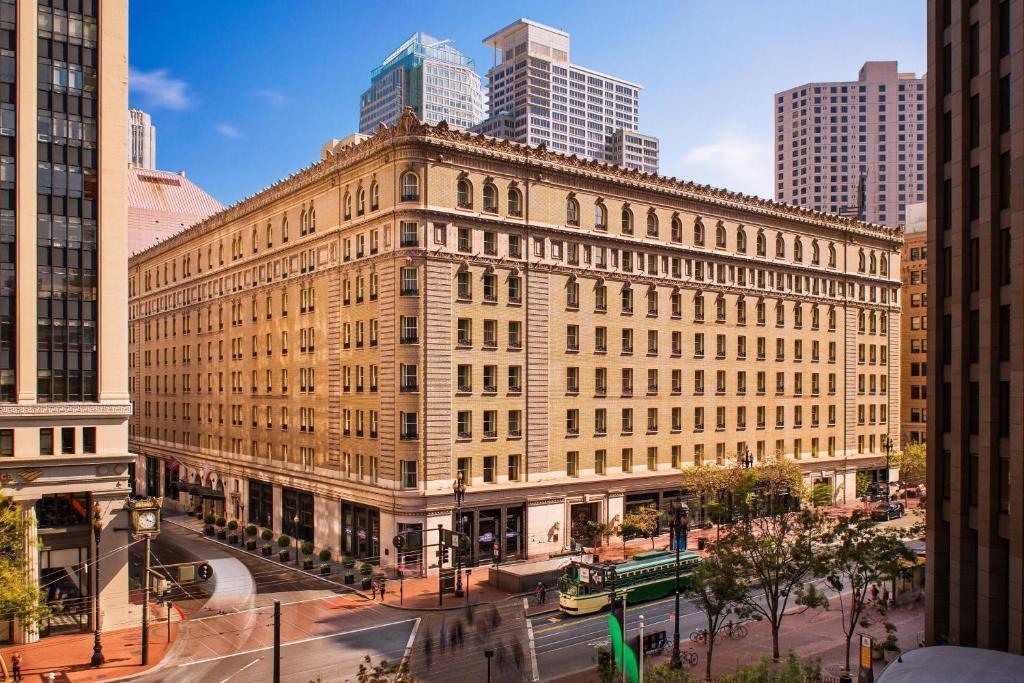
The exterior survived 1906 almost entirely intact, and it’s worth walking the block to see how little the shell itself changed. Most of what you’re seeing from Mason Street is the same stone that stood through the fire. The interior is the part that had to be rebuilt from nothing.
The Catch
This is a large, formal, business-hotel-scale property, not a boutique inn. If you want intimacy or a host who learns your name by day two, this isn’t the right category of hotel.
Nob Hill requires a cab, rideshare, or the cable car to reach most of the rest of the city. The views are the reward for the elevation. The tradeoff is that you’re not steps from Union Square or the Wharf.
The Tonga Room is genuinely loud and theatrical, which is either the appeal or a dealbreaker. If you want a quiet, understated hotel bar, Laurel Court is the better fit — save the Tonga Room for when you’re in the mood for spectacle.
Parking is exactly as expensive as everywhere else downtown. Valet runs well into the $60s–$70s per night. San Francisco’s hills and transit options make a car more of a liability than an asset here.
Tower bay-view rooms book out well in advance. The specific combination of high floor, bay view, and this address is popular enough that 6–8 weeks of lead time is a reasonable minimum if that room type matters to you.
Is It Worth It?
| Worth it? | |
|---|---|
| Architecture and history lovers | ✅ Few lobbies in the country make this kind of statement |
| UN Charter / 20th-century history buffs | ✅ You’re standing where it was actually drafted |
| Special occasions | ✅ The scale and the views both earn it |
| Business travelers | ✅ Reliable, well-connected, close enough to downtown |
| Boutique-intimacy seekers | ❌ Wrong category of hotel entirely |
| Anyone wanting to walk everywhere on foot | ⚠️ Nob Hill’s elevation and distance work against you |
Practical Info
- Address: 950 Mason Street, Nob Hill, San Francisco, CA 94108
- Check-in/out: 4pm / 12pm
- Parking: Valet only, ~$65–75/€60–69/£51–59 per night
- WiFi: Included, reliable
- Nearest airport: San Francisco International (SFO), ~25–35 min by taxi or rideshare depending on traffic
- Getting there: The Powell-Hyde or Powell-Mason cable car lines both connect Nob Hill to downtown and Fisherman’s Wharf, and are genuinely useful, not just scenic
- Languages spoken: English, Spanish, Mandarin, and other languages depending on staff on shift
- Pet friendly: Check directly with the hotel
If you’d rather compare notes before booking, our reviews of the Palace Hotel San Francisco and the Westin St. Francis cover two other San Francisco historic hotels from the same post-1906 rebuilding wave, each with a different neighborhood and a different personality. And if ghost stories are more your speed than UN history, see our San Francisco haunted hotels guide for the spookier side of the city’s grand old properties.
Final Verdict
The Fairmont is not a subtle hotel, and it was never meant to be one. It was rebuilt out of a burned shell on a one-year deadline specifically so it could reopen as proof that San Francisco was coming back, and it has spent the century since hosting UN diplomats, movie stars, and a basement bar that fires a fake rainstorm every half hour without a trace of self-consciousness. The rooms are good but secondary. Nob Hill is quiet at night and a little inconvenient to reach. None of that matters much once you’re standing in that lobby, or sitting in the Tonga Room watching the thunder start on schedule.
📖 Check availability at the Fairmont San Francisco on Booking.com →
Prices start at roughly $350/€322/£276 per night for a standard room. Ask specifically for the tower if a bay view matters to you, and don’t skip the Tonga Room — it’s the single most memorable hour you’ll spend in this hotel.
This page contains affiliate links. If you book through them, we may earn a small commission at no extra cost to you.

Curated by
Clara Ashford
Cultural Historian
Clara specializes in Art Deco, Victorian, and Beaux-Arts architecture. She brings an architectural historian's eye to every property — and an unapologetic love of ornate plasterwork.
Affiliate Disclosure: Some links on this page are affiliate links. We may earn a small commission when you book through them, at no extra cost to you. This supports our editorial work.
Highlights
The Beaux-Arts lobby, built to the scale of a train station
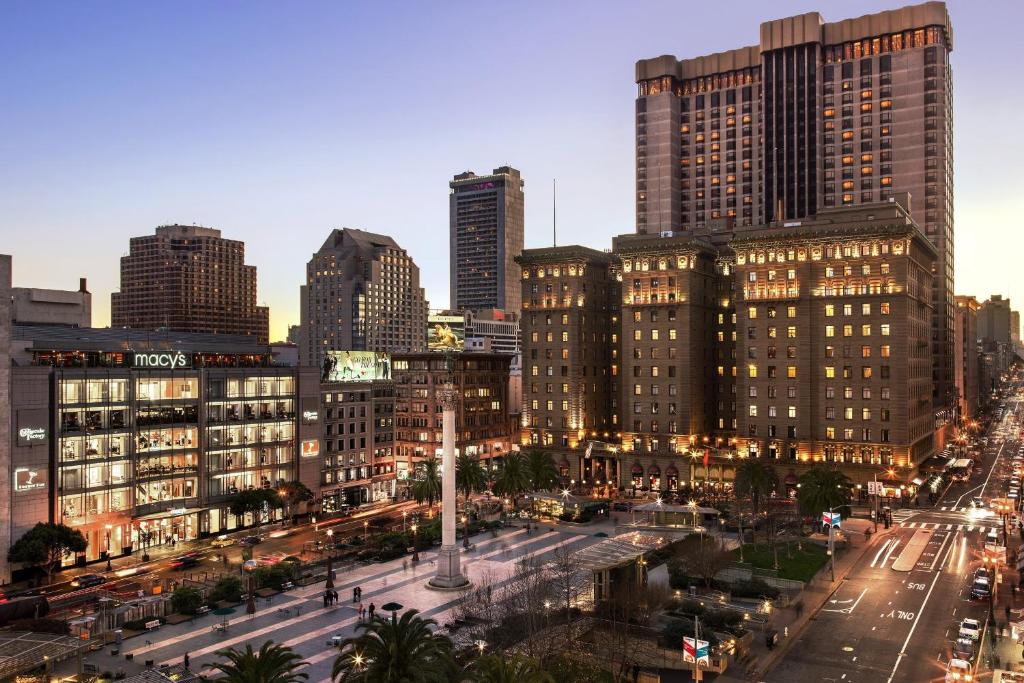
Nob Hill at dusk, looking down toward the Financial District
Frequently Asked Questions
When did the Fairmont San Francisco open?
The Fairmont was nearly ready to open when the April 18, 1906 earthquake struck, badly damaging the interior. Rather than open quietly once repairs were finished, the hotel's owners and architect Julia Morgan timed the reopening for April 18, 1907 — exactly one year after the earthquake — as a deliberate, public statement that San Francisco was rebuilding.
Was the Fairmont San Francisco damaged in the 1906 earthquake?
Yes. The building was essentially complete when the earthquake hit, and the subsequent citywide fire gutted the interior. The exterior shell survived largely intact, and architect Julia Morgan — who later designed Hearst Castle — led the reconstruction of the interior, allowing the hotel to open on schedule for its symbolic April 18, 1907 date.