| Location | San Francisco, California, USA |
| Price range | ~$220/€202/£173 — ~$800/€733/£628 per night |
| Best for | Architecture lovers, first-time SF visitors, couples, anyone who wants a proper hotel bar |
| Sweet spot | September–October. The city’s actual summer, not the foggy June version |
| Skip if | You want a design hotel in the Mission or a tech-bro hotel in SoMa |
| Book | Browse San Francisco historic hotels on Booking.com |
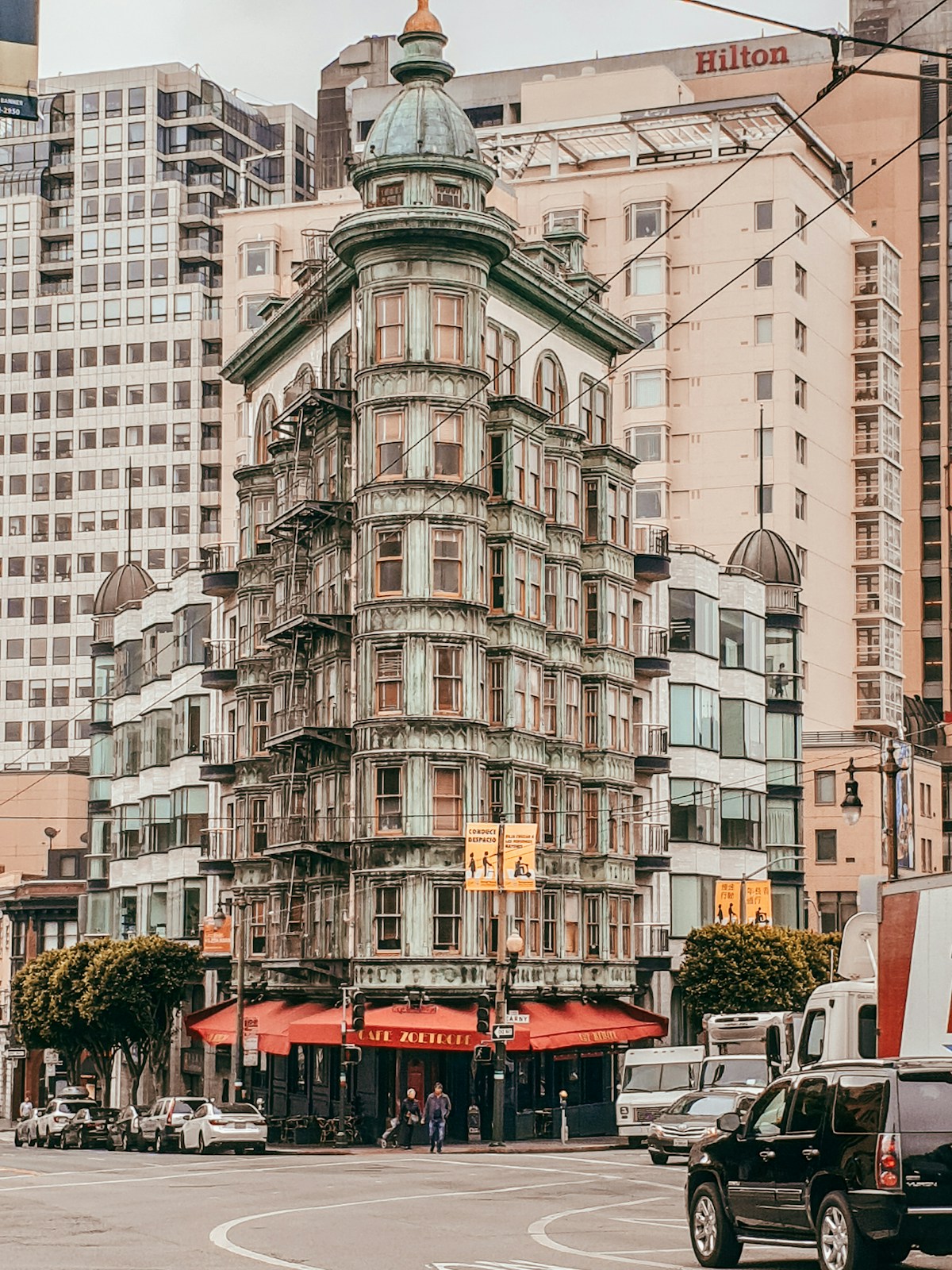
I need to tell you something about San Francisco before we get into the hotels: almost everything worth visiting here is a reconstruction.
The 1906 earthquake and fire destroyed roughly 25,000 buildings and 500 city blocks — the largest urban disaster in American history up to that point. The city that tourists walk through today was built almost entirely after 1906, by a population that was simultaneously traumatized, broke, and in a tremendous hurry to prove that San Francisco could come back bigger. It did. The rebuilding was extraordinary in both speed and ambition.
This is why San Francisco’s historic hotels have a specific quality: they were built by people who had just watched their entire city burn and who were making a statement. The Palace Hotel was rebuilt specifically to be more magnificent than the original. The Fairmont was completing construction when the earthquake hit, was damaged, and opened anyway thirteen months later as an act of civic defiance. The St. Francis reopened one year after the earthquake with a new wing.
Understanding this gives you a different relationship with these buildings. They’re not just old hotels. They’re declarations.
For the full picture of the city these hotels belong to, see our San Francisco city guide. If ghost stories are more your speed, both the Palace and the St. Francis carry real dark history behind their ghost-tour reputations — see Haunted Hotels in San Francisco.
Browse San Francisco historic hotels on Booking.com
The San Francisco Hotel Market, Honestly
San Francisco has had a complicated decade. The city center has genuinely struggled — retail vacancies, reduced foot traffic, the specific combination of tech industry volatility and pandemic aftereffects. I’m mentioning this not to be gloomy but because it affects the hotel experience directly.
The good news: the historic hotels are mostly fine, because they’ve survived worse. The Palace, the Fairmont, and the St. Francis have outlasted multiple economic cycles and they’re not going anywhere. The neighborhood context has changed — some blocks around Union Square feel different than they did in 2019 — but the hotels themselves are still operating at full quality.
The other good news: prices have adjusted. You can stay at properties that were genuinely expensive five years ago for rates that feel like a deal relative to the building quality. This is a good time to visit these hotels if you’ve been putting it off.
My honest advice: stay at one of the historic properties, use it as a base, and spend your days in the neighborhoods rather than around Union Square. The Fairmont on Nob Hill is fifteen minutes from everything and entirely above the street-level issues.
The Hotels
1. Fairmont San Francisco (Est. 1907)
The Fairmont was nearly ready to open on Nob Hill when the 1906 earthquake struck. The interior was gutted, the exterior survived, and Julia Morgan — the architect who would later build Hearst Castle — led the rebuilding before the hotel opened in 1907, on April 18, as a deliberate statement that San Francisco was back.
The lobby is the thing that everyone talks about, and the thing that words can’t fully convey — a room that captures the hotel’s rich history as much as its scale. It occupies the entire ground floor of the building, with a ceiling height and decorative ambition that belongs in a Beaux-Arts train station rather than a hotel entrance. The first time you walk in, you will stop walking. This has happened to me four times and it still happens.
Here’s the fact that most reviews skip: the United Nations Charter was drafted in this hotel in 1945. It later hosted dignitaries and celebrities including Teddy Roosevelt, Rudolph Valentino, and Tony Bennett, who premiered “I Left My Heart in San Francisco” here. Representatives from 50 nations gathered in the Fairmont while the formal signing happened at the War Memorial Opera House down the hill. The hotel has a small display about this, but it genuinely undersells it — the document that created the framework for international relations since WWII was written in this building, in rooms you can walk through.
The Tonga Room has been operating in the basement since 1945: a Polynesian restaurant and bar with a former swimming pool as its centerpiece, a floating barge where the band plays, and simulated rainstorms that happen every 30 minutes. It should be kitsch. It is somehow not kitsch. It’s one of the most specific experiences in San Francisco and it costs ~$5/€4.60/£3.93 cover charge on weekends.
| Room Type | Size | Price/night | Best for |
|---|---|---|---|
| City view room | 30m² | ~$380/€348/£298 | Solid Nob Hill base |
| Bay view room | 30m² | ~$480/€440/£376 | Worth the upgrade |
| Tower suite | 75m² | ~$800/€733/£628 | Full San Francisco experience |
Check availability at Fairmont San Francisco →
2. Palace Hotel (Est. 1875, rebuilt 1909)
The Palace has been a landmark of luxury and hospitality in San Francisco for nearly 150 years. It had 800 rooms, its own artesian wells, and a hydraulic elevator that was considered miraculous. President Warren Harding died here in 1923. The hotel has also served heads of state and appeared in Hollywood films.
The 1906 earthquake damaged the Palace but fire finished it — the building survived the shaking, then burned for three days. The rebuilt Palace, which opened in 1909, has one defining feature that earns its place on every list: the Garden Court. There’s also a lobby-level museum, Landmark 18, with mementos and photographs from the hotel’s long history.
The Garden Court is a glass-roofed atrium restaurant that has been serving Sunday brunch since 1909. It is, without exaggeration, one of the most beautiful rooms in America for breakfast. Art glass ceiling, marble columns, crystal chandeliers that were installed in 1909 and have been running ever since. The Sunday brunch is ~$95/€87/£74 per person, which sounds steep until you’re sitting under that ceiling with a glass of Champagne at 11am on a Sunday in a room that still feels ready for a formal banquet.
I made the mistake of booking a weekday breakfast there on my first visit and then spent the following two days trying to justify going back for Sunday brunch. I could not justify it. I went anyway. No regrets.
| Room Type | Size | Price/night | Best for |
|---|---|---|---|
| Classic room | 28m² | ~$280/€257/£219 | Good value in Financial District |
| Deluxe room | 36m² | ~$380/€348/£298 | More space |
| Grand Suite | 80m² | ~$700/€642/£549 | The full experience |
We’ve since written the full standalone review — see Palace Hotel for the Harding death story, the Garden Court in full, and honest pricing.
Check availability at Palace Hotel →
We’ve also since written full standalone reviews of Fairmont San Francisco and Hotel Drisco — the other two hotels in this guide.
3. Hotel Drisco (Est. 1903)
The Drisco is the outlier on this list — not grand, not famous, not particularly dramatic. It’s a 1903 Edwardian building in Pacific Heights that has been operating continuously as a hotel since construction, survived 1906 because Pacific Heights sits on bedrock rather than the landfill that liquefied downtown, and has 48 rooms.
I’m including it because it represents a genuinely different San Francisco experience: a small residential inn in a real neighborhood, away from the tourist infrastructure of Union Square and Nob Hill. Pacific Heights is where San Franciscans actually live — the streets have grocery stores, local restaurants, dry cleaners. You walk out of the Drisco and you’re in a city, not a hotel district, which makes it the perfect place for travelers who want a quieter, neighborhood-based stay.
The complimentary wine hour from 5–6pm daily has been running for years and is the most civilized thing San Francisco has to offer on a weekday evening. The concierge on my last visit had lived in Pacific Heights for twenty-two years and gave recommendations with the specificity of a local, which is what she was.
| Room Type | Size | Price/night | Best for |
|---|---|---|---|
| Superior room | 26m² | ~$350/€321/£275 | Best neighborhood immersion |
| Deluxe room | 33m² | ~$420/€385/£329 | More comfort, same vibe |
| Junior suite | 48m² | ~$550/€504/£431 | Residential-scale luxury |
Check availability at Hotel Drisco →
4. The Westin St. Francis (Est. 1904)
The St. Francis opened on Union Square in 1904 and has been the social center of San Francisco in a way that’s hard to overstate, surviving the 1906 earthquake and becoming part of the city’s recovery story. Every significant San Francisco event for 120 years has involved this hotel somehow — from the birth of the cocktail industry (the St. Francis invented the practice of washing coins to keep guests’ clothes clean) to Fatty Arbuckle’s career-ending scandal in 1921.
After the earthquake, it provided meals to people in need and became associated with a mascot dog named Francis. The Clock in the lobby — a massive ornate floor clock installed in 1907 — has been a meeting point (“meet me at the St. Francis clock”) for over a century. People still say it. The clock still works.
The tower addition from 1972 is divisive architecturally but gives the upper-floor rooms views of the bay and the city that are hard to match anywhere in Union Square. Request a high tower room with a bay view for the full effect.
| Room Type | Size | Price/night | Best for |
|---|---|---|---|
| Historic building room | 30m² | ~$280/€257/£219 | Original bones |
| Tower bay view | 32m² | ~$380/€348/£298 | The panorama |
| Landmark suite | 70m² | ~$650/€596/£510 | Full SF experience |
We’ve since written the full standalone review — see The Westin St. Francis for the Arbuckle scandal in full and honest pricing.
Check availability at The Westin St. Francis →
Food & Drinks — Where to Actually Eat
San Francisco has one of the best restaurant ecosystems in the country and the historic hotels know they have to compete seriously.
- Breakfast: The Palace Garden Court Sunday brunch (~$95/€87/£74) is the splurge worth making once. Weekdays, try Sears Fine Food on Powell Street — a diner operating since 1938, famous for their silver dollar pancakes, ~$14/€13/£11 for a stack
- The Fairmont’s Tonga Room: Cover charge ~$5/€4.60/£3.93 on weekends, cocktails ~$16–22/€15–20/£12–17. Go for the experience. The mai tai is legitimately good. The rainstorm happens every 30 minutes and is delightful every time
- Signature cocktail: The Pisco Punch at the Buena Vista Cafe near Fisherman’s Wharf (~$12/€11/£9) has been made to the same recipe since 1939. The Fairmont’s Laurel Court Bar does a SF-era Gold Rush cocktail that’s worth the ~$20/€18/£16. The Redwood Room at the Clift Royal Sonesta Hotel opened the day after Prohibition was repealed in 1933
- Must-do nearby: Zuni Café on Market Street, open since 1979, roast chicken for two (~$80/€73/£63) that takes 45 minutes and is worth it. Book ahead
- Skip: Fisherman’s Wharf restaurants, with one exception: Dungeness crab season (November through June) and specifically the crab at crab stands on Jefferson Street (~$25/€23/£19 for a whole crab). Everything else on the Wharf is tourist-grade
Things Most San Francisco Hotel Guides Miss
-
The fog is seasonal and the seasons are backwards. San Francisco’s warmest months are September and October. June is often cold and gray. “June Gloom” is a real meteorological phenomenon. If you’re coming for weather, come in autumn not summer.
-
Nob Hill is the right hill. The Fairmont sits at the top of Nob Hill, 376 feet above sea level. Getting there requires either a cab or the Powell Street cable car. Once you’re up, you don’t need to come down. The neighborhood is quiet, the views are constant, and the hotel feels like a different city from the Union Square bustle.
-
The cable cars are genuinely useful, not just a tourist attraction. The Powell-Hyde line connects Nob Hill to Fisherman’s Wharf and puts several major attractions within walking distance once you get off. It’s also genuinely the best way to experience the city’s topography, with broader city views that can include the Golden Gate Bridge on a clear day.
-
Request a room away from the elevator banks. Historic hotels have narrower corridors and the sound travels differently than modern builds. A room at the end of a corridor, away from elevators, is dramatically quieter.
-
The Financial District is different on weekends. The Palace and St. Francis sit on the edge of downtown San Francisco, surrounded by office buildings that empty on Friday afternoon. Saturday in the FiDi is peaceful in a way that Monday is not. Some people find this eerie; I find it genuinely lovely.
The Catch
-
San Francisco hotel taxes are high. 14% base hotel tax plus various surcharges can push the effective rate to 16–17%. Budget for it.
-
Union Square context has changed. The blocks immediately around the St. Francis look different than they did pre-2019. This is not a safety issue for hotel guests but it’s worth knowing that the “grand hotel on a grand avenue” atmosphere of a decade ago has some gaps currently.
-
Parking is expensive and pointless. ~$60–80/€55–73/£47–63 per day at downtown garages. The Palace and St. Francis are both on easy downtown transit routes. Do not bring a car.
-
Fog is not a myth. If you’re expecting California sunshine in June, you will be disappointed. Dress in layers regardless of the month. This is not negotiable.
-
The Fairmont Tower rooms book out fast for bay view. The specific combination of high floor + bay view + Fairmont is genuinely popular. If this matters to you, book 6–8 weeks ahead.
Is It Worth It?
| Worth it? | |
|---|---|
| Architecture / history lovers | ✓ Absolutely — these buildings are the city’s history |
| First-time SF visitors | ✓ Fairmont or St. Francis gives you the full context |
| Couples | ✓ Fairmont for romance; Palace for the Sunday brunch experience |
| Budget travelers | ⚠️ Palace and St. Francis have accessible entry points; Fairmont less so |
| Summer visitors | ⚠️ Pack layers. Fog is free but cold |
| Business travelers | ✓ Palace and St. Francis are ideal Financial District bases |
San Francisco’s historic hotels are worth it specifically because of the 1906 story — because staying in these buildings means staying in something that was built as an act of deliberate, defiant reconstruction. The city decided, in 1906, that it would be itself again no matter what it cost. These hotels are the physical evidence of that decision.
That’s worth the room rate.
Practical Info
- Getting there: SFO airport → BART to Civic Center or Powell Street, ~30 min, ~$10/€9.20/£7.85. Cab/rideshare ~$40–55/€37–50/£32–43
- Getting around: BART for distances, Muni for neighborhoods, cable cars for hills and atmosphere, walking for everything else
- Parking: Don’t. Seriously. ~$60–80/€55–73/£47–63/day downtown
- Check-in/out: 3pm / 12pm standard
- Best season: September–October for weather; January–February for pricing
- Pet policy: Fairmont and Palace allow pets with fee; Drisco allows small dogs; St. Francis no pets
- Languages: All major properties have multilingual concierge staff
Final Verdict
San Francisco’s historic hotels are built on a story — the city that burned and rebuilt itself in a year — and that story brings the history to life. The Fairmont is the essential experience: the lobby, the Tonga Room, the Nob Hill position, the United Nations history, and the kind of classic amenities that make it one of the most memorable accommodations in the city. The Palace is for the Garden Court, the Sunday brunch, and the elegant ambiance of a hotel that has been doing this since 1875. The Drisco is for travelers who want a real neighborhood instead of a hotel district.
Come in October. Eat the crab. Take the cable car at least once. Look at the buildings and remember what they mean.
Browse San Francisco historic hotels on Booking.com
Prices start at ~$220/€202/£173 per night. Add 16–17% in city taxes when budgeting. September–October rates are higher but the weather is worth it.
Affiliate Disclosure: Some links in this article are affiliate links. We may earn a small commission if you book through them, at no extra cost to you.

Written by
Clara Ashford
Cultural Historian
Clara specializes in Art Deco, Victorian, and Beaux-Arts architecture. She brings an architectural historian's eye to every property — and an unapologetic love of ornate plasterwork.