San Francisco, California
Palace Hotel, a Luxury Collection Hotel
Est. 1875 · Beaux-Arts · $$$
A banker's 1875 fantasy of a hotel, burned to the ground by the 1906 fire, and rebuilt in 1909 around a glass-domed dining room that still runs Sunday brunch on the same chandeliers. President Harding died on the eighth floor in 1923. Nobody's fully agreed on why.
I asked a bellman where President Harding died, mostly to see if he’d flinch. He didn’t. He walked me toward the eighth floor, rattled off three competing theories for cause of death — food poisoning, stroke, heart failure, take your pick, nobody settled it in 1923 and nobody’s settled it since — and moved on to describing the turndown service like this was a completely normal segue. It probably is, for him. I’d guess he gets that question weekly.
That’s the Palace Hotel in one interaction: a genuinely grand, genuinely strange building that treats its own history as ambient noise rather than a selling point. Which is funny, because the history is the entire reason to stay here. This is a hotel that burned to the ground once, got rebuilt bigger and better out of spite, and has been quietly serving Sunday brunch under the same glass dome for well over a century.
| 📍 Location | 2 New Montgomery Street, Financial District, San Francisco, California |
| 💰 Price range | $$$ — roughly $280–$700+/night depending on room and season |
| ⭐ Best for | Architecture lovers, history lovers, Sunday brunch, business travelers, couples |
| ⏱️ Sweet spot | Sunday morning — build the whole trip around brunch, then figure out the rest |
| 🚫 Skip if | You want boutique intimacy, a pool, or a quiet Financial District on a Saturday |
| 📖 Book | Palace Hotel on Booking.com |
Check availability and current rates →
The History Nobody Tells You
The original Palace Hotel opened in 1875, built by a banker named William Chapman Ralston who apparently didn’t do anything at a normal scale. It had around 800 rooms — at the time, one of the largest hotel room counts anywhere in the world — plus its own artesian water wells and early hydraulic “rising rooms,” which is to say elevators, at a moment when most buildings in America still expected you to use your legs. Carriages drove straight into a covered central courtyard to drop off guests. That courtyard is the direct ancestor of the room you’ll eat brunch in today.
Ralston didn’t get to see much of his hotel’s later life — he died in 1875, the same year it opened, under circumstances history has been similarly vague about. The Palace, meanwhile, just kept going. It survived the initial shaking of the April 18, 1906 earthquake completely intact, which is a genuinely impressive engineering fact for a 31-year-old building. What it did not survive was the fire. San Francisco burned for three days after the quake, and the Palace — full of wood, carpet, and a century’s worth of furnishings — went with most of downtown. The building that had outlasted the ground moving under it could not outlast what came after.
It reopened in 1909, rebuilt as something more explicitly monumental: a Beaux-Arts pile with a new centerpiece, the Garden Court, a glass-domed atrium dining room ringed with marble columns. The crystal chandeliers installed in 1909 are the same ones lighting the room today. Sunday brunch has run there, more or less continuously, since the reopening — which means the version of brunch you’d order this weekend is a direct descendant of the one served the year the Titanic was still four years from launching.
Then, in 1923, President Warren G. Harding died here on August 2nd during a stop on a cross-country trip, in what remains one of the more notable presidential deaths connected to any American hotel. The official explanation at the time shifted depending on who you asked — a stroke, a heart attack, food poisoning from spoiled crab were all floated — and the ambiguity was never fully cleared up. The hotel doesn’t make a production of it. There’s a small lobby-level museum, Landmark 18, with historic photographs and memorabilia from the building’s long run, and Harding gets a mention among a much larger sweep of San Francisco history rather than a shrine of his own.
If you’re trying to make sense of why so much of downtown San Francisco shares this same “burned, then rebuilt bigger” origin story, our San Francisco city guide walks through the 1906 disaster and its aftermath in more detail — the Palace is one of several buildings still standing because of that specific decade of civic stubbornness.
Book your room at the Palace →
The Rooms — Real Talk
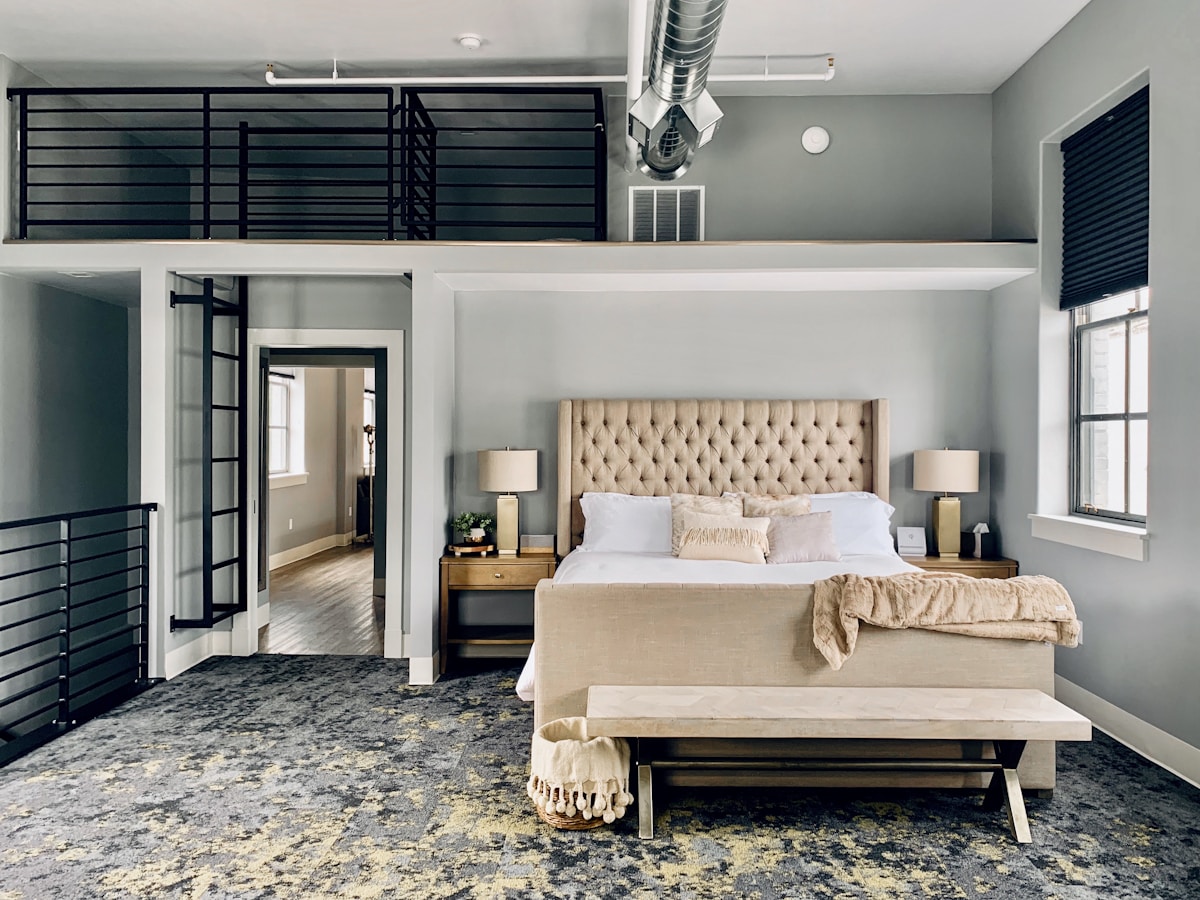
The rooms are comfortable, well-kept, and — I’ll be honest — the least interesting thing about staying here. High ceilings and good bones carry over from the 1909 rebuild, but the interiors themselves read as competent modern luxury-hotel rooms rather than time capsules. That’s not a complaint, exactly. You don’t actually want 1909 wiring or 1909 water pressure. You just shouldn’t expect the room itself to be the reason you booked.
| Room Type | Price/night | Best for |
|---|---|---|
| Classic Room | ~$280/€258/£221 | Financial District base, solo travelers |
| Deluxe Room | ~$380/€350/£299 | Couples wanting more space |
| Grand Suite | ~$550/€507/£434 | A splurge with a sitting room to justify it |
| Presidential Suite | ~$700+/€645+/£552+ | Full occasion, historical irony optional |
Ask for a room away from the elevator banks — this is an old building with old-building acoustics, and sound travels down these corridors in ways a modern chain hotel would never allow. Higher floors on the New Montgomery side also get you clear of most street noise, which matters more here than you’d think for a hotel this size.
Food & Drink
Everything else at the Palace is a supporting act for the Garden Court, so let’s start there.
The Garden Court is a glass-domed atrium dining room with marble columns and the original 1909 crystal chandeliers still doing the actual work of lighting the room, not just decorating it. Sunday brunch has run here since the hotel reopened, and it is, without exaggeration, one of the most beautiful rooms in America to eat breakfast in. Expect a buffet-plus-à-la-carte spread, a live pianist, Champagne on offer from the moment you sit down, and a ceiling of glass panes that turns midday San Francisco light into something closer to a cathedral than a restaurant. Budget ~$95–115/€88–106/£75–91 per person. It is genuinely not cheap. It is also the single best reason to stay at this hotel rather than merely walk past it.
- Breakfast (non-Sunday): the hotel’s regular breakfast service is solid but is, correctly, priced and portioned like a normal hotel breakfast
- The one non-negotiable meal: Garden Court Sunday brunch — book it before you book the room, tables go fast
- Lunch: the Financial District around New Montgomery empties out on weekends, so weekday lunch options (sandwich counters, quick Cal-Italian spots) are far better than weekend ones
- Dinner: the hotel’s steakhouse is a reasonable in-house option, but you’re a short walk from the Ferry Building and SoMa, both of which will out-cook a hotel restaurant most nights
- Skip: ordering a full dinner in-house on a Friday or Saturday when better food is ten minutes away on foot
The lobby bar is a comfortable, unhurried place for an early-evening drink before you go find dinner elsewhere — not a destination bar in its own right, but a perfectly good spot to sit under old ceilings with a martini and let your feet recover from walking the hills.
Things I Noticed That Most Reviews Miss
The Garden Court’s dome is original glass, not a modern replacement, and it shows. The panes have a faint waviness that newer glass doesn’t have. Look up during brunch instead of only looking at your plate.
Landmark 18, the little lobby museum, takes about ten minutes and is worth every one of them. It’s easy to walk past — it’s tucked near the lobby rather than announced — but the historic photographs of the 1875 original and the rebuilt 1909 version, side by side, do more to explain this hotel than any plaque in the Garden Court.
The Harding story is undersold on purpose. Staff will tell you the full version — the competing theories, the timeline, the fact that his wife reportedly refused an autopsy — if you ask directly. It’s not on a placard. You have to want it.
Weekends in the Financial District are eerily quiet outside the hotel. The neighborhood is office towers that empty out Friday evening, which means Saturday morning around New Montgomery Street feels almost abandoned. Some guests find this unsettling. I found it kind of restful, in a “you have the sidewalk to yourself” way.
The scale of the original 800-room hotel is hard to picture until you see the old floor plans in Landmark 18. The current Palace has fewer than 500 rooms. It is still enormous. The 1875 version was, by any measure, bigger than it needed to be, which was rather the point.
The Catch
This is a big, business-hotel-scale property, not a boutique inn. If you want a small, personal, “the owner knows your name” experience, this isn’t it. The Palace is a Marriott-operated Luxury Collection hotel with the scale and slight impersonality that implies.
The Financial District is genuinely dead on weekends. Charming in a ghost-town way for about a day, less charming if you’re staying three nights and want street life outside the hotel doors after 6pm on a Saturday.
No pool, and the fitness center is functional rather than impressive. This is a historic downtown property, not a resort. Plan your workouts and your relaxation accordingly.
Parking is exactly as expensive and pointless as everywhere else downtown. Valet runs $65–75/€60–69/£51–59 per night. San Francisco’s transit and walkability make a car a liability here, not an asset.
Garden Court brunch tables book out, especially around holidays. Reserve ahead — walking in on a Sunday morning hoping for a table under the dome is optimistic at best.
Is It Worth It?
| Worth it? | |
|---|---|
| Sunday brunch pilgrims | ✅ This is the single best reason to come |
| Architecture and history lovers | ✅ Few hotels in the country pack this much into one building |
| Business travelers | ✅ Financial District location, solid meeting space |
| Couples wanting quiet, boutique romance | ⚠️ Beautiful, but big and public rather than intimate |
| Anyone wanting a pool or resort amenities | ❌ Wrong category of hotel entirely |
Practical Info
- Address: 2 New Montgomery Street, Financial District, San Francisco, CA 94105
- Check-in/out: 4pm / 12pm
- Parking: Valet only, ~$65–75/€60–69/£51–59 per night
- WiFi: Included, reliable
- Nearest airport: San Francisco International (SFO), ~25–30 min by taxi or rideshare, or BART to Montgomery Street station a few blocks away
- Languages spoken: English, Spanish, Mandarin (multilingual concierge staff)
- Pet friendly: Check directly with the hotel
Final Verdict
The Palace Hotel is not the coziest historic hotel in San Francisco, and it’s not trying to be. It’s a monument that burned down once, got rebuilt more ambitiously than before, and has spent the century since quietly serving brunch under a glass dome to whoever shows up. The rooms are good but not the point. The Financial District goes quiet on weekends. None of that matters much once you’re sitting in the Garden Court on a Sunday with a glass of Champagne, looking up at chandeliers that were already old when your grandparents were born.
If the scale or the Financial District setting isn’t for you, our review of the Westin St. Francis covers one of the other San Francisco historic hotels from the same post-1906 rebuilding wave, with a different neighborhood and a different personality. And if you want the full lay of the land before choosing between them, our San Francisco historic hotels guide covered the Palace in brief long before this standalone review existed — this page is the deeper dive that guide always pointed toward.
📖 Check availability at the Palace Hotel on Booking.com →
Prices start at roughly $280/€258/£221 per night for a classic room. Add Garden Court Sunday brunch, at ~$95–115/€88–106/£75–91 per person, before you check anything else off your San Francisco list.
This page contains affiliate links. If you book through them, we may earn a small commission at no extra cost to you.

Curated by
Clara Ashford
Cultural Historian
Clara specializes in Art Deco, Victorian, and Beaux-Arts architecture. She brings an architectural historian's eye to every property — and an unapologetic love of ornate plasterwork.
Affiliate Disclosure: Some links on this page are affiliate links. We may earn a small commission when you book through them, at no extra cost to you. This supports our editorial work.
Highlights
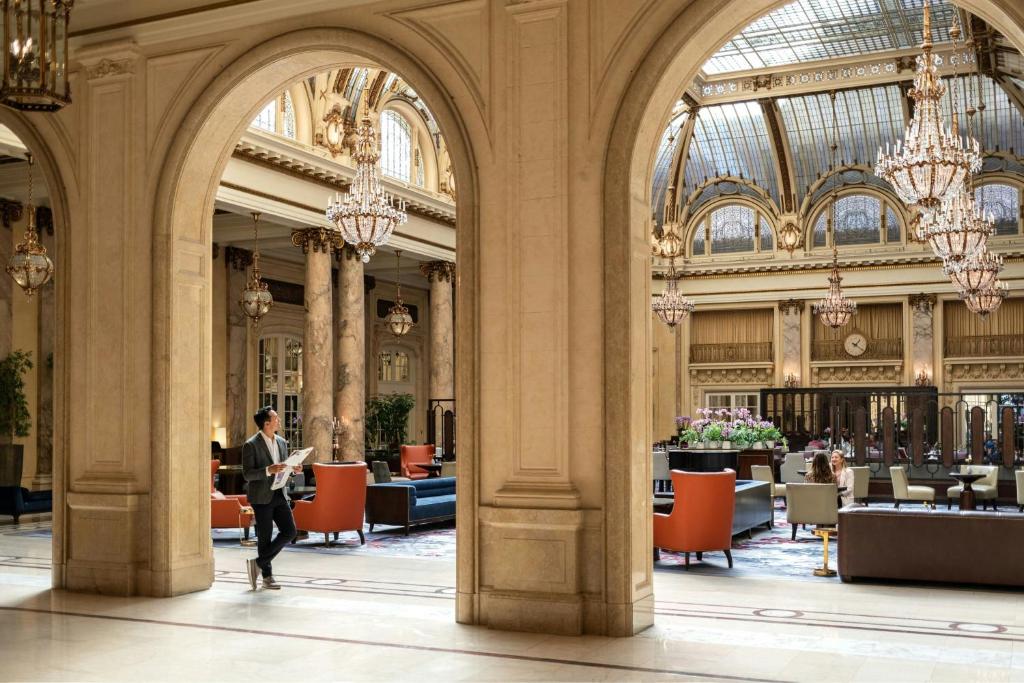
The glass-domed Garden Court, still lit by the 1909 chandeliers
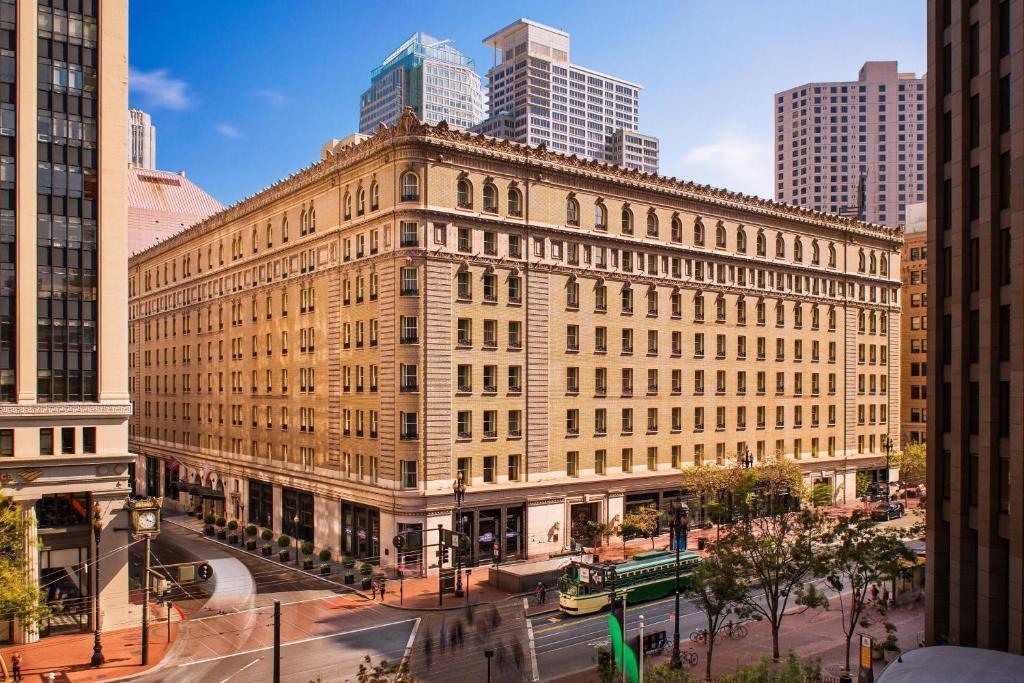
The New Montgomery Street facade, Financial District