| Location | Manhattan, New York City, USA |
| Price range | ~$390/€359/£307 — ~$1,800/€1,657/£1,417 per night |
| Best for | Literary types, Gilded Age romantics, anyone with an expense account or a very specific bucket list |
| Sweet spot | Late April–early June or September–October. December is magical and also priced like it |
| Skip if | You want a quiet, undiscovered gem. These three hotels are the opposite of undiscovered |
| Book | Browse New York historic hotels on Booking.com |
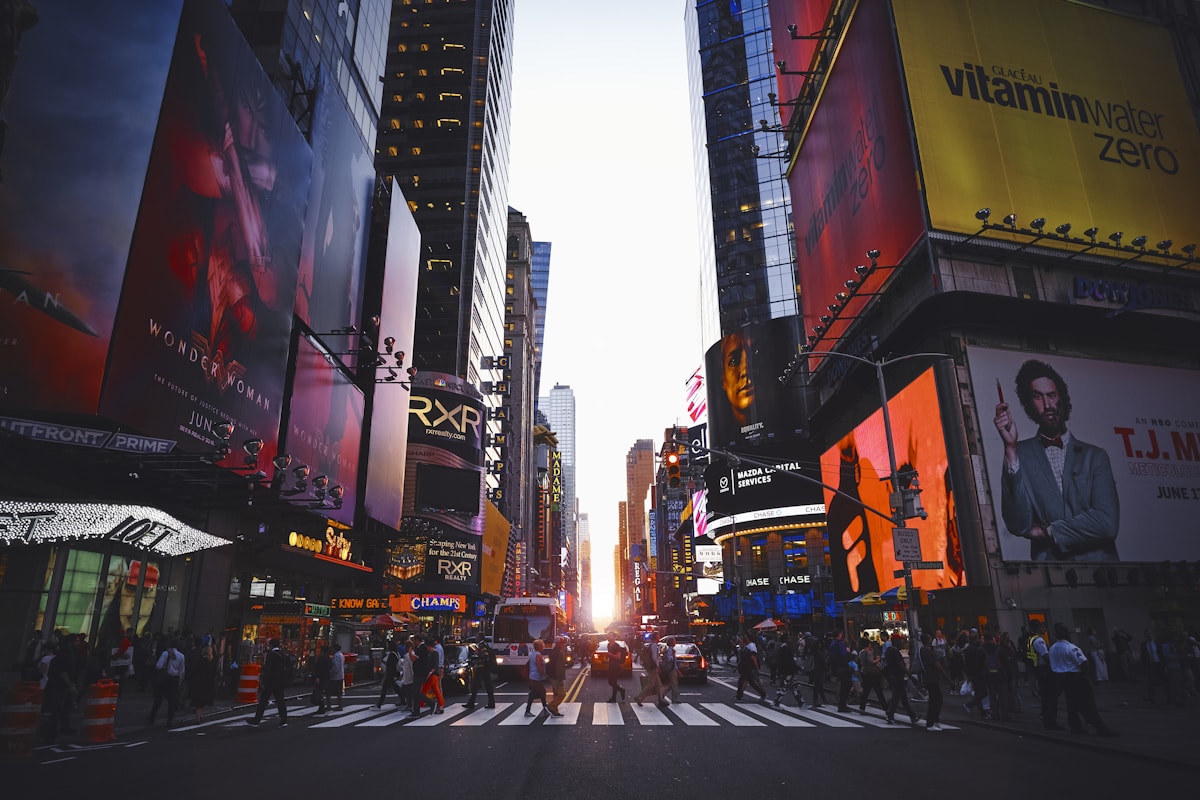
New York doesn’t really do “historic charm” the way smaller American cities do. It does scale, and then it does history on top of the scale, and the result is a handful of hotels that are simultaneously the most famous buildings on their block and still, somehow, functioning hotels you can book a room in tonight. That’s the strange trick of Manhattan’s grand dames — they’re landmarks first and hospitality businesses second, and you’re paying for both.
This guide covers three of them, and I picked these three deliberately rather than trying to cram in every hotel with a plaque out front. The Plaza is the flagship — the one everyone’s heard of, the one that shows up in movies whether or not the plot requires a hotel. The Algonquin is the writers’ hotel, small and specific and weirder than its reputation suggests. The Pierre is the one nobody talks about enough, which given the price tag is either an oversight or a mercy.
Hot take before we get into it: the Algonquin is the most interesting hotel in New York and the least expensive of the three, which tells you something about how New York City actually prices “history.” It’s not charging you for square footage. It’s charging you for the story, and at the Algonquin the story is genuinely worth more than the room.
Browse New York historic hotels on Booking.com
Your Guide to New York’s Historic Grand Dame Hotels
New York’s grand hotel era overlaps two distinct booms — the Gilded Age mansion-building of the 1900s and 1910s, when Fifth Avenue was rezoning itself from private palaces to public ones, and the Jazz Age explosion of the 1920s, when Midtown filled in with hotels built for a city that had just discovered it was the center of the world. The Plaza belongs to the first wave. The Algonquin and The Pierre bookend the second, with the Algonquin arriving just before it and The Pierre landing right as it peaked, months before the crash that ended it.
What ties these buildings together isn’t architectural style — a French Renaissance château, a modest brick hotel, and a copper-roofed Art Deco tower don’t have much in common on paper. It’s proximity and function. All three sit within a few blocks of Central Park or Fifth Avenue, all three were built to house money and the people who wanted to be near money, and all three did it well enough that a century later they’re still doing the same job, just with WiFi.
The other thing New York does that other American cities don’t: it lets its hotels become characters in the culture rather than just backdrops for it. A hotel lobby in most cities is where you wait for a car. In New York, the lobby has occasionally been where the party, the deal, or the entire structure of modern magazine writing happened.
The Hotels
1. The Plaza, A Fairmont Hotel (Est. 1907)
The Plaza opened on October 1, 1907, designed by Henry Janeway Hardenbergh — the same architect responsible for the Dakota — in a French Renaissance château style that was meant to look like it had been airlifted in from the Loire Valley and set down at the corner of Fifth Avenue and Central Park South. It worked. The building became a National Historic Landmark in 1986, which is a fairly late date for a building everyone had already been treating like a landmark for eighty years.
The guest list and cultural footprint here is almost absurd in its density. F. Scott Fitzgerald set a pivotal scene of The Great Gatsby in one of its suites — the confrontation scene, appropriately, since the Plaza has always been where New York’s ambitions come to either be confirmed or fall apart. The Beatles stayed here in February 1964 during their first American visit, with fans crowding Fifth Avenue outside. Truman Capote threw his legendary Black and White Ball in the Grand Ballroom in 1966, arguably the most consequential party of the 20th century in terms of who showed up. Kay Thompson set her Eloise books here, and there’s an Eloise Suite that takes the joke seriously. Home Alone 2 filmed scenes in the lobby in 1992, which is the detail that actually gets recognized by the most people, generationally speaking.
A 2005–2008 renovation reorganized the building — part of it became private residences — but the hotel itself retained roughly 282 rooms and suites, its ballrooms, and the Palm Court, which is the part everyone actually comes for even if they’re not staying overnight. The rooms are extremely expensive by any reasonable standard: standard rooms routinely run $900–$1,800 a night, and suites go well beyond that. This is not a hotel that apologizes for its prices, and I don’t think it should — you are, quite literally, paying rent on a National Historic Landmark.
For the full standalone review — room-by-room breakdown, what the Eloise Suite actually gets you, whether the Palm Court tea is worth the wait — see our dedicated Plaza review.
| Room Type | Size | Price/night | Best for |
|---|---|---|---|
| Fifth Avenue view room | 28m² | ~$900/€829/£708 | The cheapest way to say you stayed at the Plaza |
| Central Park view room | 32m² | ~$1,300/€1,197/£1,024 | The view that justifies the trip |
| Eloise Suite / signature suite | 90m²+ | ~$1,800+/€1,657+/£1,417+ | Fitzgerald cosplay, unlimited budget |
Check availability at The Plaza →
2. The Algonquin Hotel (Est. 1902)
The Algonquin is smaller than you expect, quieter than its reputation, and by far the most historically dense square footage on this list. It opened in 1902 on West 44th Street, an unremarkable Midtown block, and would have stayed unremarkable if a group of New York writers hadn’t started having lunch there in 1919.
That lunch became the Algonquin Round Table — Dorothy Parker, Robert Benchley, Alexander Woollcott, George S. Kaufman, and a rotating cast of critics, playwrights, and wits who met at the same table nearly every day for roughly a decade, trading the kind of acerbic one-liners that got quoted in newspaper columns the next morning and shaped Jazz Age literary culture in the process. The New Yorker — the magazine, still very much a going concern in 2026 — was reportedly conceived over one of these lunches in 1925. That’s an enormous amount of American cultural output to trace back to one hotel dining room.
The other piece of Algonquin lore that outlives the Round Table: the resident hotel cat. The hotel has kept a cat roaming its lobby for decades, always named either Hamlet or Matilda depending on the current cat’s gender, and the tradition is treated with the kind of institutional seriousness most hotels reserve for their wine list. Now operating as part of Marriott’s Autograph Collection, the Algonquin has been renovated repeatedly, but the lobby still reads like a room where something important might be about to be said.
The rooms are smaller than the Plaza’s and the finishes are more modest, but the price reflects that — this is genuinely the value play on this list, and I mean that only in relative Manhattan terms.
| Room Type | Size | Price/night | Best for |
|---|---|---|---|
| Standard room | 20m² | ~$390/€359/£307 | The literary pilgrimage on a budget |
| Deluxe room | 26m² | ~$450/€414/£354 | A little more room to work in |
| Suite | 40m² | ~$650/€598/£511 | If you want to write your own one-liners |
Check availability at The Algonquin →
3. The Pierre, A Taj Hotel (Est. 1930)
The Pierre is the hotel most New York guides forget to mention, and I genuinely don’t understand why, because it has one of the best skyline signatures in the city — that copper mansard roof, visible from a startling distance across Central Park, is as recognizable as anything on the Plaza’s façade once you know to look for it.
It opened in 1930, built by developer Charles Pierre Casalasco in an Art Deco and Georgian hybrid style, at Two East 61st Street with direct views over Central Park. The timing was brutal — months after the 1929 crash, into a city that had suddenly stopped wanting to build luxury towers — but the building survived it, went through decades under partial Getty family ownership (J. Paul Getty held a stake and reportedly kept a small apartment in the building), and became internationally notorious in 1972 as the site of one of the largest jewel heists in American history. Since 2005 it’s been managed by Taj Hotels, giving it the distinction of being one of the few grand New York properties under Indian hospitality management rather than a domestic or European chain.
The signature experience here is The Rotunda, a circular room under a hand-painted ceiling where the hotel serves an afternoon tea that’s genuinely competitive with the Plaza’s — quieter, less crowded, and arguably better executed precisely because fewer tourists know to ask for it. The Central Park views from the upper floors are some of the best in the city, full stop, hotel or otherwise.
The price reflects all of this. The Pierre runs roughly $1,050–$1,100 a night for standard categories, making it one of the more expensive properties in Manhattan even before you look at suites. You’re paying for the Getty pedigree, the Rotunda, and a Central Park view that the Plaza’s own Fifth Avenue rooms can’t always match.
| Room Type | Size | Price/night | Best for |
|---|---|---|---|
| Classic room | 26m² | ~$1,050/€967/£827 | The entry price of Getty-adjacent living |
| Park view room | 32m² | ~$1,300/€1,197/£1,024 | The actual reason to book here |
| Suite | 55m²+ | ~$2,000+/€1,842+/£1,575+ | Jewel-heist reenactment, at your own risk |
Check availability at The Pierre →
Food & Drinks — New York Edition
- Palm Court, The Plaza: The signature New York afternoon tea experience — tiered stands, a harpist some afternoons, and a room that’s been serving tea since the building opened in 1907. Expect ~$95–120/€87–110/£75–94 per person and a wait even with a reservation
- The literary bars of the Algonquin: The Blue Bar and the lobby lounge trade on the Round Table history hard, and mostly earn it — order a martini and read the framed newspaper clippings on the walls rather than scrolling your phone
- The Rotunda, The Pierre: The quieter, better-executed answer to the Palm Court. Book afternoon tea here if the Plaza is sold out, or honestly, book it here first
- Skip: Hotel room service at all three properties. You are three minutes from some of the best restaurants in the world. Use them
- Do: Walk into the Plaza lobby even if you’re not staying there. It costs nothing and the ceiling alone is worth the detour
Things Most New York Hotel Guides Get Wrong
-
The Algonquin gets treated as a footnote to the Plaza, and it shouldn’t be. Dollar for dollar, it’s the more culturally significant building — an entire era of American magazine writing came out of that lobby.
-
The Pierre is criminally under-covered. Most “best historic hotels NYC” lists mention the Plaza and stop. The Pierre’s Getty history, the 1972 heist, and the Rotunda tea deserve equal billing.
-
Everyone assumes the Plaza’s Eloise branding is just marketing. It’s not incidental — Kay Thompson wrote the books specifically about this hotel, and the Eloise Suite is a genuine piece of the property’s identity, not a licensing add-on.
-
“Near Central Park” doesn’t mean the same thing at each hotel. The Pierre and the Plaza both overlook the park directly; the Algonquin is a fifteen-minute walk south in Midtown. Don’t book the Algonquin expecting park views.
-
Guides rarely mention that these hotels are landmarked buildings, not renovated shells. The 2005–2008 Plaza renovation converted part of the tower to condos specifically because the building itself couldn’t be altered structurally without landmark review. That constraint is why the public rooms still feel original.
The Catch
-
Manhattan pricing is not negotiable. Even the “value” option here, the Algonquin, runs close to $400 a night. None of these three are budget hotels, and none of them pretend to be.
-
You will share the lobby with tourists. The Plaza in particular functions as a tourist attraction whether or not you’re a guest — expect crowds, phone cameras, and a Palm Court wait even with a reservation.
-
Old buildings have old-building quirks. Room layouts at the Algonquin and Plaza can be irregular, closets can be small, and soundproofing in century-old party walls is not always Marriott-2026 standard.
-
Location convenience varies more than the price tags suggest. The Pierre and Plaza sit right on Central Park; the Algonquin is deep in the Times Square/Midtown crush, which some travelers love and others find exhausting after day two.
Is It Worth It?
| Worth it? | |
|---|---|
| First-time NYC visitors, one splurge night | ✓ The Plaza — it’s the one everyone will recognize in your photos |
| Literary and theater types | ✓ The Algonquin, without question |
| Central Park views on a slightly smaller budget than the Plaza | ⚠️ The Pierre — smaller budget is relative, it’s still over $1,000/night |
| Budget-conscious travelers | ⚠️ None of these are for you; the Algonquin is the closest thing to reasonable |
| Business travelers near Times Square | ✓ The Algonquin’s location is genuinely convenient |
| Anyone chasing the Great Gatsby/Black and White Ball fantasy | ✓ The Plaza, obviously |
The Plaza is the essential New York hotel experience if you’re only doing this once. The Algonquin is the best value and the best story per dollar. The Pierre is the one to book if you want the Central Park view and the history without the Plaza’s tourist density.
Practical Info
- Getting there: JFK → AirTrain + subway (
60–75 min,$40–60/€37–55/£32–47), no direct subway. Newark (EWR) → AirTrain + NJ Transit into Penn Station (~45 min,$10.75/€9.90/£8.46) or car service ($70–90/€64–83/£57–71). LaGuardia (LGA) → car service ($17/€16/£13) or car service ($80–100/€74–92/£63–79) - Getting around: All three hotels are walkable to each other and to most Midtown attractions. The subway (4/5/6, N/Q/R/W) covers everything else; a single ride is ~$2.90/€2.67/£2.28
- Parking: Expect ~$60–80/€55–74/£47–63 per day at hotel or nearby garages. Driving in Manhattan is rarely worth it
- Check-in/out: 3pm / 12pm (noon) standard across all three properties
- Best room tip: At the Plaza and Pierre, always ask specifically for Central Park-facing rooms — the difference in experience is larger than the price difference
- Languages: All three properties have multilingual staff, given the international guest mix
Final Verdict
New York’s historic hotels don’t need much of a sales pitch — they’ve been making their own case for over a century. The Plaza is the flagship for a reason: Fitzgerald, the Beatles, Capote, Eloise, and a lobby that still stops people mid-sentence. The Algonquin is the hotel I’d send a writer to, and the best value of the three by a wide margin. The Pierre is the one to book if you want the park views and the Getty-era intrigue without fighting Plaza-level crowds for a table at tea.
Book early, expect to pay Manhattan prices, and don’t skip the lobby of whichever two you’re not staying at.
Browse New York historic hotels on Booking.com
Affiliate Disclosure: Some links in this article are affiliate links. We may earn a small commission if you book through them, at no extra cost to you.

Written by
Thomas Waverly
Travel Correspondent
Thomas covers East Coast, Southern, and Western grand hotels. He has personally stayed in over 80 historic properties and considers a properly aged lobby bar essential to any review.