Chicago, Illinois
Congress Plaza Hotel
Est. 1893 · Beaux-Arts · $$
A 1893 Beaux-Arts landmark on Michigan Avenue with a genuinely dramatic labor history, a heavily marketed ghost story that doesn't hold up to scrutiny, and rooms that range from nicely restored to visibly tired. Priced well below its Michigan Avenue neighbors, for reasons that are mostly honest ones.
I checked into the Congress Plaza on a Tuesday and there were two separate groups in the lobby comparing notes on Room 441. Neither of them was staying in it. They just wanted to stand near the elevator bank and talk about it, phones out, recording nothing in particular. That’s the Congress Plaza in one scene: a genuinely old, genuinely significant building that has, at some point, decided its ghost story is more marketable than its architecture.
I’m not against a good ghost story. I am against a lazy one, and this hotel’s most famous one is lazier than it looks. More on that below. First, the part that actually matters: this is a 130-year-old Beaux-Arts hotel facing Grant Park at a price that undercuts almost everything else on this stretch of Michigan Avenue, and that combination is worth understanding before you decide if the ghost stuff is a bonus or a dealbreaker.
| 📍 Location | 520 South Michigan Avenue, Chicago Loop |
| 💰 Price range | ~$110/€100/£87 per night |
| ⭐ Best for | Budget travelers, history buffs, Grant Park access, people who want a good story more than a good pillow |
| ⏱️ Sweet spot | Shoulder season (April–May, September–October) for lower rates and fewer festival crowds in the park |
| 🚫 Skip if | You want a fully modernized room every time, or you’re easily bothered by a building showing its age |
| 📖 Book | Congress Plaza Hotel on Booking.com |
Check availability and current rates →
The History Nobody Tells You
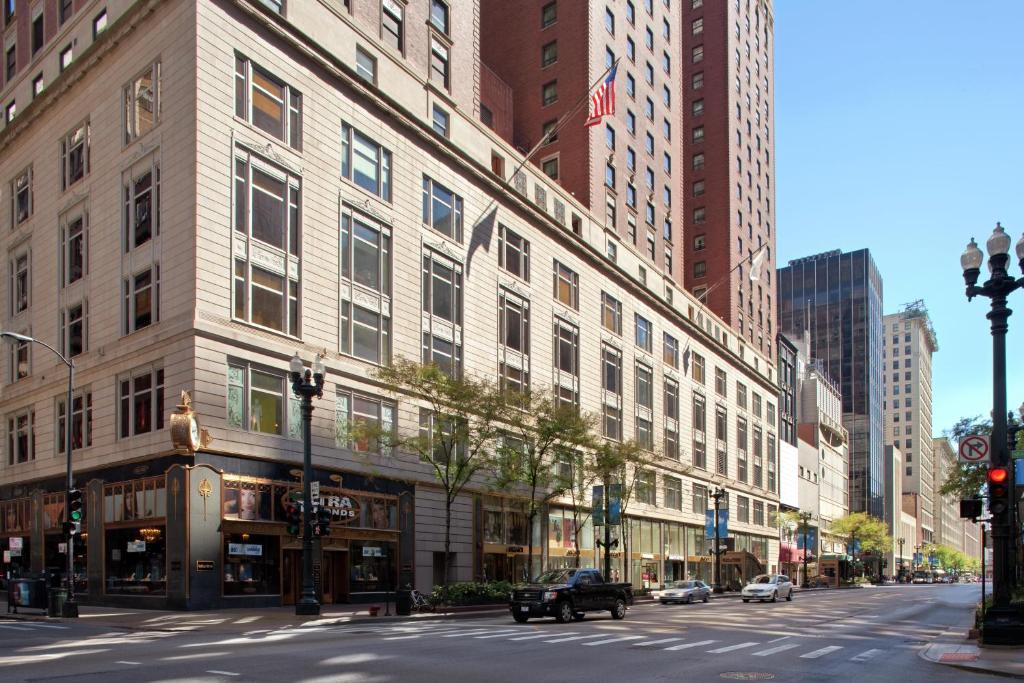
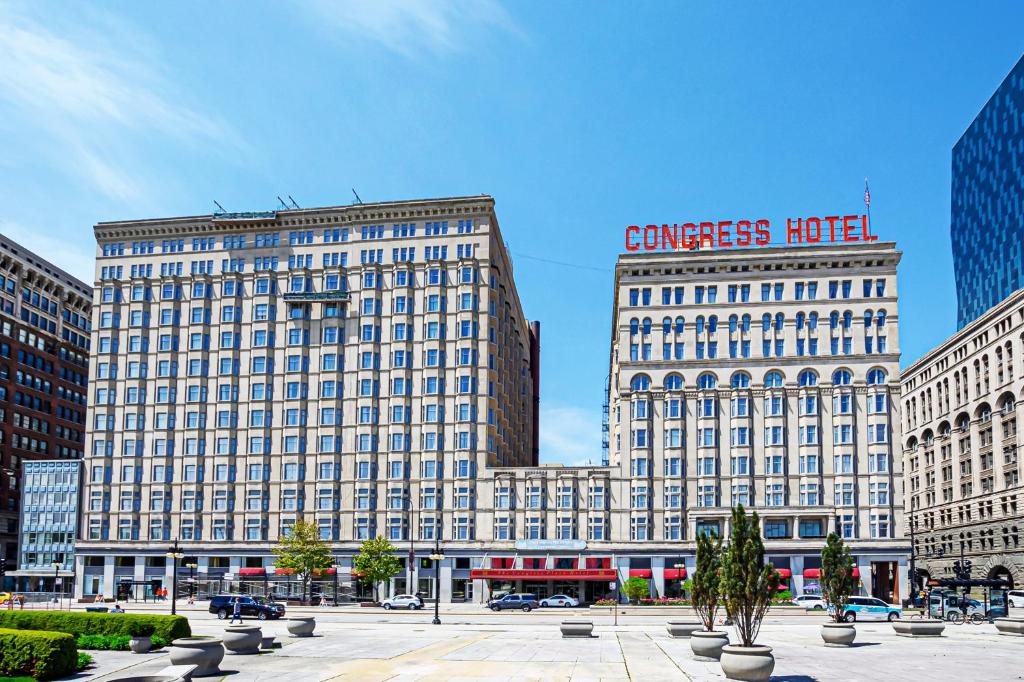
The building opened in 1893 as the Auditorium Annex, built to catch the overflow from the World’s Columbian Exposition — the fair that gave Chicago the White City, the Ferris wheel, and about ten million out-of-town visitors who needed somewhere to sleep. It sat on Michigan Avenue facing Grant Park then, same as now, and it’s been renamed twice since: Congress Hotel, then Congress Plaza Hotel. The bones underneath the signage are the same 1893 Beaux-Arts building the whole time.
Here’s what actually happened here, cleaned up from the tour-guide version:
The labor story is real, and it’s the most significant thing about this hotel, full stop. On June 15, 2003, hotel workers represented by UNITE HERE Local 1 walked out over wage cuts, frozen healthcare contributions, and subcontracting that was hollowing out union jobs. The strike didn’t end in a week, or a year. It ran for nearly ten years — until May 30, 2013 — making it one of the longest hotel workers’ strikes in U.S. history. It drew national labor press coverage and public solidarity visits, including from then-Illinois-Senator Barack Obama. It ended without major concessions from management. I’m not going to dress that up as a quirky footnote — it was a decade of real people losing real wages over a fight that the hotel, by most accounts, won on its own terms. If that history matters to you as a traveler, it should factor into your decision the way it would for any business with a labor record this long and this public.
The Al Capone connection is real, but not the way it’s usually told. The popular version has Capone bunking here under an alias. That doesn’t hold up — there’s no credible record of Capone actually staying at the hotel. What’s better documented: Capone reportedly played cards every Friday night in a meeting room overlooking Grant Park, and his lieutenant Jake “Greasy Thumb” Guzik once phoned him in Palm Island, Florida from a phone inside the building. It’s a smaller, weirder, more specific story than “gangster slept here,” and I think it’s more interesting for exactly that reason.
The ghost story has a documented recency problem. The hotel bills itself as Chicago’s most haunted, and Room 441 is now the room everyone asks for. Here’s the thing — that specific room number is a pretty recent addition to the lore. For years, ghost tour guides reportedly just assigned a random room number when telling the story on the sidewalk outside. Room 441 became “the” haunted room mostly because a handful of articles repeated it and tour operators standardized on it afterward. The older stories about one dramatically sealed haunted room appear to be two different rooms getting merged into one: Room 666, which is now a storage closet and hasn’t been guest-facing in years, and Room 209, pulled from inventory separately. Two unrelated closed rooms became one legendary sealed room somewhere in the retelling. If you want the fuller haunted-hotel rundown across the country, including how this one stacks up, we’ve got a roundup of the most haunted hotels in America — it’s worth reading before you book the “haunted package,” which, yes, is a thing you can buy here.
We’d also covered this hotel in brief as part of our wider historic Chicago hotels guide, but it deserved its own full write-up, given how much of the popular story turns out to be slightly wrong.
Book your room at the Congress Plaza →
The Rooms — Real Talk
This is the part where I have to be straightforward with you: the Congress Plaza is not evenly renovated. Some floors and rooms have been refreshed — new bedding, updated bathrooms, paint that isn’t from a different decade. Others have not, and you can tell within about ten seconds of opening the door. This isn’t a hidden flaw; it’s priced into the rate.
| Room Type | Price/night | Best for |
|---|---|---|
| Standard Room | ~$95/€87/£75 | Budget travelers, short stays, people prioritizing location over polish |
| Park View Room | ~$130/€119/£103 | Grant Park views, slightly better-kept floors |
| Junior Suite | ~$165/€151/£130 | More space, marginally more consistent finishes |
If you book the cheapest available room without checking recent guest photos, you’re gambling a little. The building is 1893 stock with additions and renovations layered in over more than a century, and it shows unevenly floor to floor. Ask at check-in if a recently updated room is available — it sometimes is, for the same rate.
Food & Drink
There’s on-site dining, but I wouldn’t build your trip around it. The real advantage here is location: you’re across the street from Grant Park, a short walk from the Art Institute, and inside the South Loop, which has quietly become a legitimate food neighborhood.
- Breakfast: A short walk to the Loop gets you real coffee and a bagel that isn’t hotel-buffet issue — skip the in-house breakfast unless convenience beats quality that morning
- Lunch: Grab something to eat in Grant Park if the weather’s decent — there’s no better lunch view in the Loop than the one you already paid for with your room rate
- Deep dish, obviously: it’s a ten-minute cab from multiple legitimate contenders — don’t let anyone tell you there’s one correct answer, just don’t order it for a fast lunch
- Dinner: The South Loop and nearby Loop restaurant scene covers everything from steakhouse to modern American — you don’t need the hotel restaurant for a good dinner here
- Drinks: The hotel bar is fine for a nightcap and for eavesdropping on the ghost-tour crowd; it is not a destination bar on its own merits
Things I Noticed That Most Reviews Miss
The Grant Park side of the building is genuinely the best-located hotel real estate on this stretch of Michigan Avenue for the price. You’re steps from the park, the lakefront trail, and museum campus, at a rate well under what the Michigan Avenue hotels around you are charging for comparable proximity.
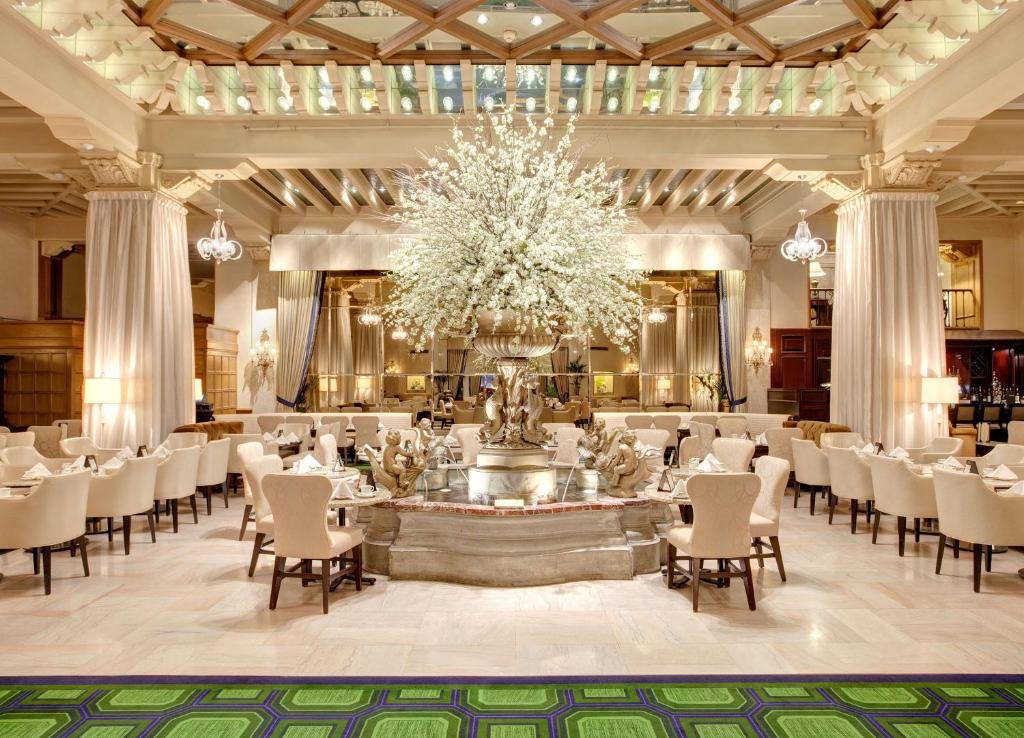
The hallways tell the building’s age better than the rooms do. Wide, high-ceilinged, with sightlines and proportions you don’t get in a hotel built after 1960. Even on a floor with dated rooms, walking the hallway is worth doing slowly.
Staff will tell you the real ghost stories if you ask instead of just requesting Room 441. A few front desk and housekeeping staff I talked to were candid that the room-number specificity is newer than the legend, and seemed almost relieved to say so out loud instead of just running the script.
The strike history isn’t advertised anywhere in the hotel, and I think that’s worth noting. You won’t find a plaque. If you want that context, you have to bring it with you — which is part of why I laid it out above in detail rather than in a single line.
It’s a genuinely walkable base for a Chicago trip that isn’t built around Michigan Avenue shopping. Grant Park, the lakefront, museum campus, and the Loop are all within easy walking distance, which isn’t true of every hotel charging half again as much a few blocks north.
The Catch
The building is unevenly maintained. Some rooms and floors are genuinely nice. Others are dated in a way that goes past “historic charm” into “needs work.” This is the single biggest variable in whether you’ll like your stay, and it’s largely out of your control at booking time.
The haunted-hotel marketing oversells a story that’s partly manufactured. If you’re booking specifically for the Room 441 legend, know that the room-specific version of the story is younger than the hotel’s haunted reputation itself. The building has plenty of real history — the ghost story isn’t the strongest part of it.
It’s not a full-service luxury hotel, and shouldn’t be priced or expected as one. No spa, modest fitness facilities, dining that won’t be the highlight of your trip. That’s consistent with the price point, not a surprise hiding in the fine print.
If you want a more consistently renovated historic Chicago stay, look elsewhere in the same city. The Palmer House Hilton and The Drake Chicago are both historic Chicago hotels with more uniform upkeep — at a correspondingly higher price. The Congress Plaza’s whole value proposition is trading some of that consistency for a lower rate and a park-facing address.
Is It Worth It?
| Worth it? | |
|---|---|
| Budget travelers wanting a historic Michigan Avenue address | ✅ Best value on this stretch |
| History and labor-history buffs | ✅ A genuinely significant, under-told story |
| Ghost tourists chasing Room 441 specifically | ⚠️ Know the story’s real timeline first |
| Travelers who want guaranteed consistent room quality | ⚠️ Renovation is uneven — check recent photos |
| Full-service luxury expectations | ❌ Look at the Palmer House or the Drake instead |
Honest verdict: yes, conditionally. The Congress Plaza earns its price point honestly — it’s cheaper than its neighbors because parts of it need work, not because of some hidden flaw you’re not being told about. What you’re actually paying for is 1893 Beaux-Arts architecture, a Grant Park address, and a hotel that’s part of Chicago’s real labor history, at a rate the hotels around it can’t touch.
Practical Info
- Address: 520 South Michigan Avenue, Chicago, IL 60605 (Chicago Loop)
- Check-in/out: 3pm / 12pm
- Parking: Valet available on-site, ~$55/€50/£43 per night — Loop parking generally isn’t cheap anywhere nearby
- WiFi: Included
- Nearest airport: Chicago Midway (MDW), ~20 min by taxi; O’Hare (ORD), ~35–45 min depending on traffic
- Getting there: Taxi, rideshare, or the Metra/CTA from either airport into the Loop
- Languages spoken: English
- Pet friendly: Check directly with hotel before booking
Final Verdict
The Congress Plaza Hotel is a real 1893 building with a real, decade-long labor dispute in its recent history, a genuine (if overcorrected) Al Capone footnote, and a famous ghost story that’s less consistent than the tour guides make it sound. None of that is a reason to avoid it. It’s a reason to book it with clear eyes: cheap for the neighborhood, uneven in the rooms, unbeatable for the Grant Park address, and more historically interesting than its marketing department seems to realize.
📖 Check availability at the Congress Plaza Hotel on Booking.com
This page contains an affiliate link. If you book through it, we may earn a small commission at no extra cost to you.

Curated by
Eleanor Rhodes
Founding Editor
Eleanor has spent 20 years documenting America's endangered historic properties. A certified historic preservation specialist, she believes the best way to save old hotels is to fill their rooms.
Affiliate Disclosure: Some links on this page are affiliate links. We may earn a small commission when you book through them, at no extra cost to you. This supports our editorial work.
Highlights
The Beaux-Arts facade that's outlasted three name changes, Michigan Avenue
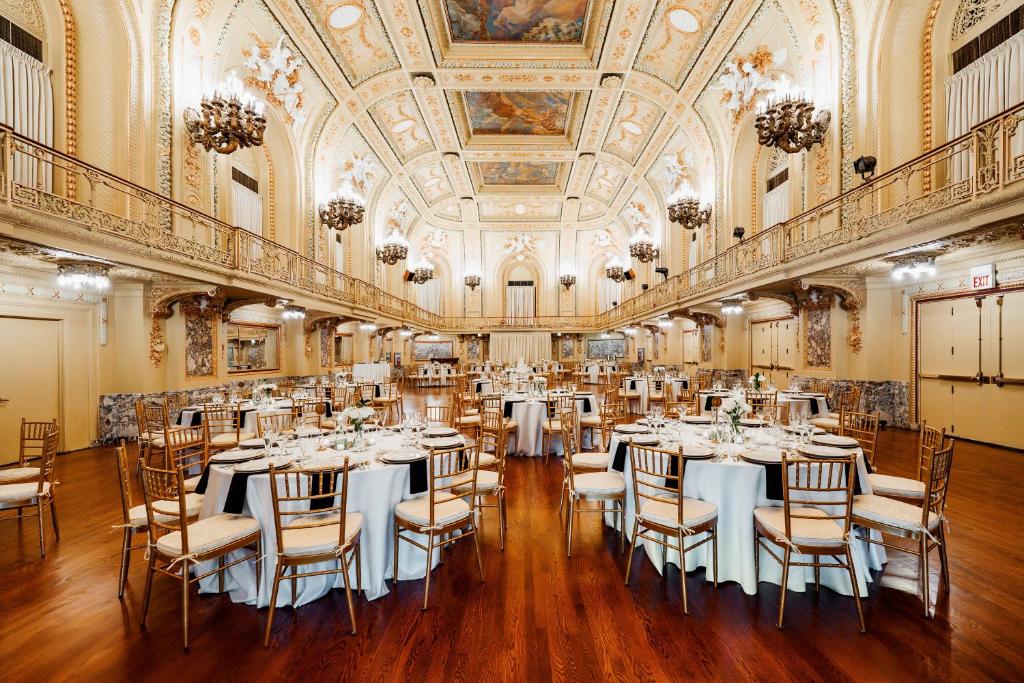
The Gold Room, restored ballroom grandeur