Estes Park, Colorado
The Stanley Hotel
Est. 1909 · Georgian Colonial Revival · $$
F.O. Stanley built this hotel in 1909 after tuberculosis nearly killed him, then lived another 31 years to watch it become the most famous haunted hotel in America. Stephen King slept in Room 217 once. Everything you think you know about the movie connection is wrong.
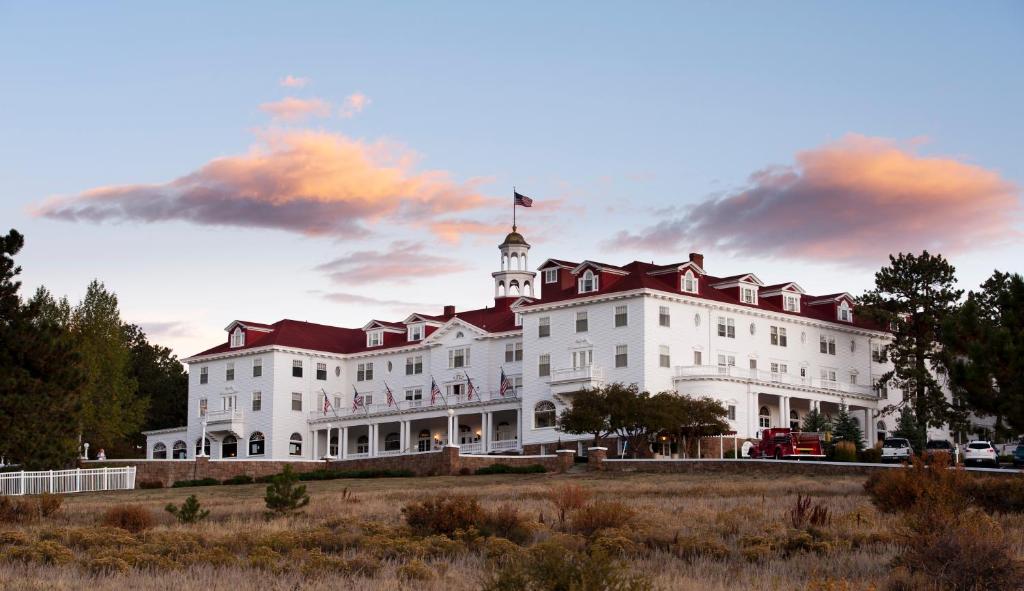
I checked into The Stanley Hotel already knowing the Stephen King story, already knowing about Room 217, already braced for a lobby full of Shining merchandise. What I wasn’t braced for was how good the actual building is, independent of any of that — white Georgian Colonial Revival columns against the Front Range, the kind of symmetry that makes you stop on the driveway and just look at it for a second before you go check in.
Then I got to the front desk and asked the question every guest apparently asks, and the answer surprised me enough that it became the whole reason for this review.
I should say upfront: I did not come here for the ghosts. I came here because I wanted to see the hotel a famous horror novelist stayed in for one night in 1974 and because Rocky Mountain National Park is a twenty-minute drive from the front lawn. The ghost stuff turned out to be unavoidable — it’s built into the gift shop, the tour schedule, the framed newspaper clippings in the hallway — but it’s not actually the best reason to book a room here. The best reason is a few paragraphs down, and it involves a dying man, a steam-powered car, and a recovery nobody expected.
| 📍 Location | 333 Wonderview Ave, Estes Park, Colorado |
| 💰 Price range | ~$250/€230/£195 per night |
| ⭐ Best for | Ghost hunters, King fans, Rocky Mountain National Park trips |
| ⏱️ Sweet spot | Late September (fall color, thinner crowds, still open roads) |
| 🚫 Skip if | You want modern-hotel soundproofing and zero ghost tour foot traffic |
| 📖 Book | The Stanley Hotel on Booking.com |
Check availability and current rates →
The History Nobody Tells You
F.O. Stanley — co-inventor of the Stanley Steamer, the steam-powered car that briefly out-competed the internal combustion engine — came to Estes Park in the 1900s because he had tuberculosis and his doctors had given him months to live. That’s not hotel-marketing embellishment; that’s the actual reason this building exists. The dry mountain air did something his doctors hadn’t predicted: he recovered. He built the hotel in 1909 as a mountain resort for wealthy Easterners, and then went on living for another 31 years, dying in 1940 at the age of 91 — decades after anyone expected him to see the hotel finished, let alone famous.
His wife, Flora Stanley, was a trained pianist, and she’s the hotel’s other resident legend. She’s said to still play in the Music Room at night — staff and guests report hearing piano music coming from inside when the room is locked and empty. Nobody’s ever caught her at it. The piano just keeps getting reported.
Then there’s Room 217. Stephen King and his wife Tabitha stayed there on October 30, 1974 — the hotel’s last night open before it closed for the off-season, so they were nearly alone in the building. King had a nightmare that night about his young son being chased down a corridor by a fire hose, and that image became the seed of The Shining, published in 1977. We covered this in more depth in our haunted hotels roundup, but it’s worth restating here because it’s the entire reason this hotel is on anyone’s radar.
Think about the timing for a second. This wasn’t a hotel that had been building a horror-adjacent reputation for decades and then got a novelist to confirm it. It was an empty, off-season mountain resort that happened to host one specific guest on one specific night, and that guest happened to be a writer whose imagination turned an empty corridor into one of the most enduring haunted-house novels of the twentieth century. Almost the entire modern identity of this hotel traces back to that single, fairly mundane coincidence of scheduling.
Here’s the correction almost nobody makes: Stanley Kubrick’s 1980 film adaptation of The Shining was not filmed here. Kubrick shot his exteriors at Timberline Lodge on Mt. Hood in Oregon and built the Overlook’s interiors on soundstages in England. He never set foot in Estes Park for the production. The Stanley Hotel you’ve actually seen on screen is from the 1997 ABC television miniseries — the one King himself wrote and produced, starring Steven Weber — which was filmed on location here. Nearly every guest I overheard during my stay assumed the opposite. The gift shop does not go out of its way to correct them.
I asked a front desk staffer directly how often guests bring this up, expecting a shrug. Instead I got a fairly detailed rundown: apparently it’s a near-daily conversation, usually triggered by a guest recognizing the exterior from “the movie” and being visibly confused when told that specific building — the Overlook as filmed by Kubrick — doesn’t exist anywhere near Colorado. The confusion is understandable. The Kubrick film is the culturally dominant version of the story. The miniseries is the one that actually used this address. Neither fact makes the hotel less worth visiting; it just means the postcards in the gift shop are technically referencing the wrong production.
Book your room at The Stanley →
The Rooms — Real Talk
| Room Type | Price/night | Best for |
|---|---|---|
| Standard Room | ~$250/€230/£195 | Most travelers, first-timers |
| Room 217 | ~$350/€320/£275 | King fans who’ve already decided |
| Suites | ~$400+/€370+/£315+ | Special occasions, extra space |
Room 217 books out months in advance, especially in October, and it is not the best room in the building by any objective measure — it’s a perfectly nice, mid-sized historic room that happens to have a very good origin story attached to it. You are paying a premium for the myth, not the square footage. If you want the best actual room for the money, ask for one of the upper-floor rooms with a west-facing balcony; you’ll get the same mountain view Room 217 doesn’t really have, for less money and without a line of tourists asking to take a photo of your door.
The walls are old-hotel walls, which means you’ll hear your neighbors, the elevator, and occasionally the ghost tour groups moving through the halls until close to midnight. Bring earplugs regardless of your feelings about the supernatural.
Bathrooms have been modernized across most of the property, which I mention only because a surprising number of historic hotels this age still make you negotiate with a claw-foot tub and a temperamental showerhead. The Stanley didn’t skip this update, and I was grateful for it after a long day hiking in the park.
Food & Drink
The Cascades Restaurant does a solid mountain-lodge dinner menu — elk, trout, a bison meatloaf that’s better than it sounds — and the dining room windows do the same trick the driveway does, framing the Rockies so well you’ll forget to look at your menu. Breakfast is unremarkable but fine; you’re not here for the eggs.
The Whiskey Bar is the actual reason to eat and drink on property. Over 200 American whiskeys, open into the evening, and a bartending staff that’s clearly more interested in pre-Prohibition cocktail history than in ghost stories — which, after two days of ghost-tour chatter in the lobby, was a genuine relief. Have a drink here before or after any of the ghost programming; it resets the tone.
If you want to eat off-property, downtown Estes Park is a five-minute drive and has better casual options than the hotel’s own menu — worth it for lunch on a day you’re heading into the park anyway.
Afternoon tea is also served in the main lobby on a fairly regular schedule, and it’s more popular than you’d expect for a mountain hotel best known for a horror novel. Scones, finger sandwiches, a decent tea selection, and a view of the same lawn where you presumably just took a photo of the front facade. It’s not essential, but it’s a pleasant hour if you’ve already done the ghost tour and the whiskey bar and need something in between.
Things I Noticed That Most Reviews Miss
The Shining connection everyone gets backwards. Covered above, but it bears repeating because it’s the single most common misconception I heard repeated out loud by other guests during my stay: Kubrick’s movie was not shot here. The 1997 miniseries was. Correcting people politely at the bar became something of a hobby.
F.O. Stanley’s actual life story is better than any ghost story the hotel tells. A dying man moves to the mountains expecting to die, recovers, builds a grand hotel, and lives another three decades to watch it succeed. That’s a better narrative arc than anything involving a piano playing itself.
Ghost programming is now a genuine profit center, not a novelty add-on. Nightly ghost tours, a dedicated “Night Ghost Hunt,” and heavy Halloween-season events are baked into the business model at this point. If you’re not interested in any of it, you can absolutely ignore it and just enjoy a well-built 1909 mountain hotel — but don’t expect the lobby to be quiet about it.
The location is the real headline, ghosts aside. You are at the literal entrance to Rocky Mountain National Park. I’d have come here for that alone.
The Music Room piano story gets far less attention than Room 217, and it’s the better anecdote. Ask a longtime staff member about Flora Stanley. The answers are more specific and stranger than the standard tour script.
The building’s actual architecture rewards a slow walk. Georgian Colonial Revival isn’t a common style for a 1909 Colorado mountain resort — it’s a deliberate, formal, East Coast look transplanted to the Rockies, and it says something about who F.O. Stanley was building for. Most guests are moving fast between the gift shop and the ghost tour meeting point and never really look at the columns, the symmetry, the proportions. Slow down for five minutes before you go inside.
The Catch
You’re paying a premium for a story, particularly in Room 217. Know what you’re actually buying before you book it.
Ghost tour groups are a real, mundane annoyance. They move through public areas until close to midnight. If you need total quiet after 10pm, ask for a room away from the main tour route.
October is a mess, in the fun-if-you-want-it, exhausting-if-you-don’t sense. Prices spike, the hotel fills with costumed guests, and the whole property leans hard into Halloween. Great if that’s what you came for. Skip October if it isn’t.
This is an old building with old-building quirks. Uneven floors, audible pipes, thinner walls than a modern hotel. It’s a 1909 property; the character comes with tradeoffs.
The town leans into the hotel harder than the hotel leans into itself. Estes Park’s downtown has multiple shops selling Shining-branded merchandise, most of which is referencing the Kubrick film the hotel had nothing to do with. If you want the hotel experience without the surrounding tourist-trap layer, stay on property and skip a few of the closer souvenir shops.
Is It Worth It?
| Worth it? | |
|---|---|
| Stephen King fans | ✅ Yes — the real history exceeds the legend |
| Rocky Mountain National Park trips | ✅ You genuinely can’t beat the location |
| Ghost hunters | ✅ Legitimate programming, take it or leave it |
| Light sleepers | ⚠️ Bring earplugs, avoid October |
| Travelers wanting quiet, modern amenities | ❌ Wrong hotel |
Practical Info
- Address: 333 Wonderview Ave, Estes Park, Colorado 80517
- Check-in/out: 4pm / 11am
- Parking: Free on-site parking
- WiFi: Included
- Nearest airport: Denver International (DEN), roughly 90 minutes by car
- Getting there: Rental car is essentially required; there’s no meaningful public transit from Denver
- Nearby: Estes Park town center and the entrance to Rocky Mountain National Park — see our Estes Park city guide for the rest of the trip
- Pet friendly: Check directly with the hotel
Final Verdict
The Stanley Hotel earns its reputation, but not for the reason most people arrive expecting. The real story — a dying man who came here to die, recovered, and built something that outlived every prediction about him — is better than the ghost story built on top of it. The Shining connection is real but scrambled in the popular imagination: the King nightmare happened here, the Kubrick film did not, and almost nobody visiting seems to know the difference.
Go for F.O. Stanley’s story and the Rocky Mountain views. Let the ghost tours be a bonus, not the reason.
If you leave with only one fact corrected, make it this one: the movie that made this hotel famous wasn’t filmed here. The miniseries was. Everything else about the visit — the columns, the whiskey bar, the drive up into the national park the next morning — holds up regardless of which screen adaptation you’re thinking of.
📖 Check availability at The Stanley Hotel on Booking.com
Affiliate Disclosure: Some links in this article are affiliate links. We may earn a small commission if you book through them, at no extra cost to you.

Curated by
Thomas Waverly
Travel Correspondent
Thomas covers East Coast, Southern, and Western grand hotels. He has personally stayed in over 80 historic properties and considers a properly aged lobby bar essential to any review.
Affiliate Disclosure: Some links on this page are affiliate links. We may earn a small commission when you book through them, at no extra cost to you. This supports our editorial work.
Highlights
The white facade at sunset, exactly as haunted-looking as advertised
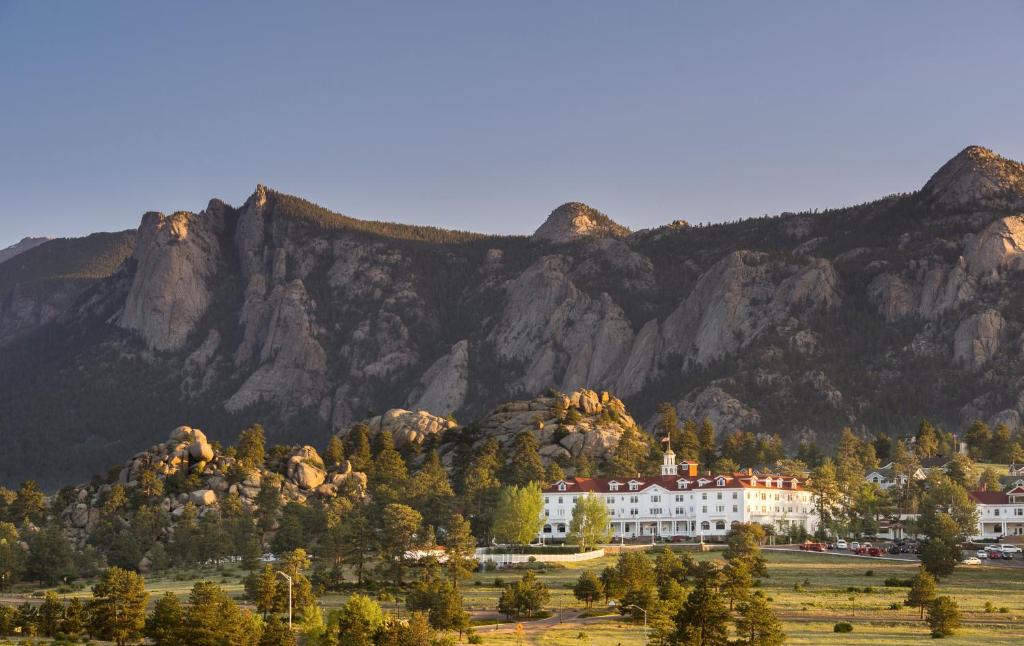
The Rocky Mountains framing the hotel's front lawn