Singapore, Singapore
Raffles Hotel Singapore
Est. 1887 · Colonial Victorian · $$$$
The all-suite Singapore institution where the Sling was invented, Kipling and Conrad drank, and a tiger was allegedly shot under the billiard room. Real 2026 prices, real history, and an honest accounting of what a National Monument costs per night.
The doorman is dressed like a Sikh guard from 1899 — turban, white uniform, mustache that has clearly been maintained with intent — and he opens the door for you whether or not you’re staying here. That’s the first thing you learn about Raffles. The building doesn’t really distinguish between guests and pilgrims. Everyone gets the same door.
I sat in the courtyard on my first evening, under a frangipani tree that may or may not be the actual frangipani tree, ordering a Singapore Sling because you have to, at least once, even though I already knew what I thought about sweetened gin cocktails invented to look like fruit juice for colonial-era women who weren’t supposed to be seen drinking. It was fine. It was also completely beside the point.
Raffles isn’t a hotel you evaluate on thread count. It’s a hotel you evaluate on whether you can sit still in it and feel history breathing on the back of your neck. I could. Barely. There were a lot of tour groups.
| 📍 Location | 1 Beach Road, Singapore |
| 💰 Price range | ~$1,100/€1,010/£870 per night and up |
| ⭐ Best for | History lovers, honeymooners, literary travelers, anyone celebrating something expensive |
| ⏱️ Sweet spot | February–April (drier, marginally less humid) |
| 🚫 Skip if | You want a budget option or a quiet, tourist-free lobby |
| 📖 Book | Raffles Hotel Singapore on Booking.com |
Check availability and current rates →
The History Nobody Tells You
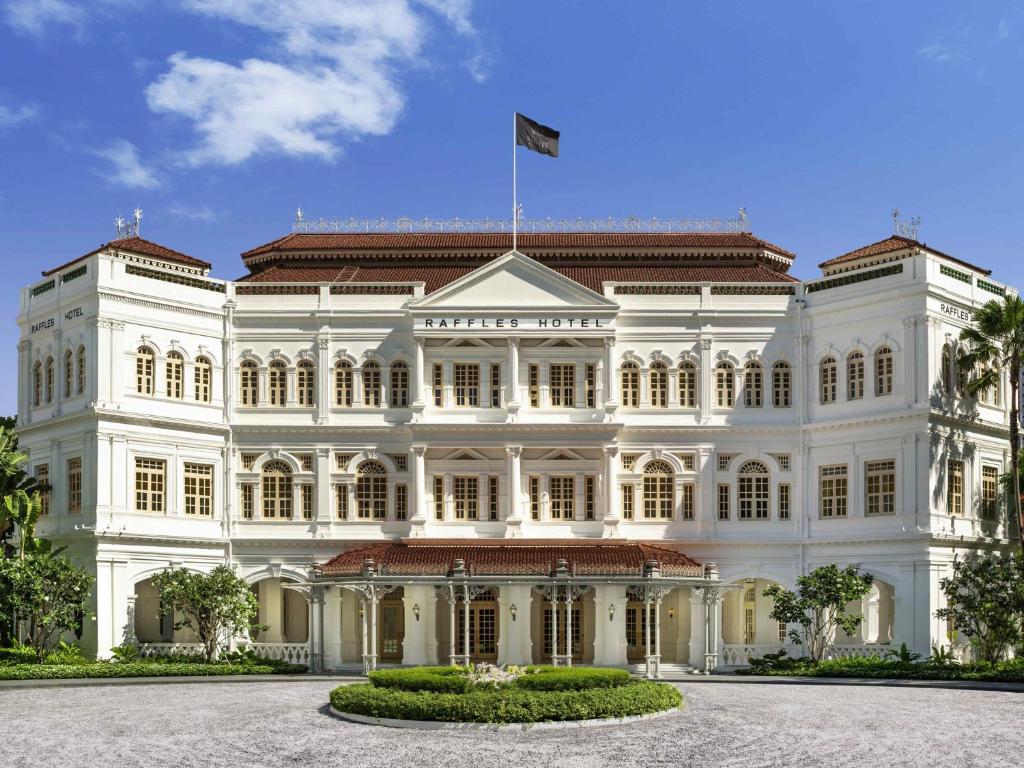
Raffles opened in 1887 as a ten-room beachfront bungalow, run by the Sarkies Brothers — a family of Armenian hoteliers who had a habit of building the grandest hotel in whatever port city they landed in. Ten rooms is almost comic to think about now, standing in a lobby the size of a small church. The Sarkies kept expanding through the 1890s, and by 1899 the building you’re looking at today — the long colonial façade, the porte-cochère, the proportions that make everything feel slightly larger than a human being needs — was essentially complete. It’s named for Sir Stamford Raffles, the British administrator credited with founding modern Singapore in 1819, who never actually stayed here, because he’d been dead for over fifty years by the time it opened. Nobody seems bothered by this.
The Long Bar is where the actual myth lives. Around 1915, a bartender named Ngiam Tong Boon mixed gin, cherry liqueur, Bénédictine, and pineapple juice into something pink enough to be socially acceptable for women to drink in public, and called it the Singapore Sling. It’s still made there, still pink, still served with a small bowl of peanuts and an open invitation to throw the shells on the floor — one of the only hotels on earth where littering is a house tradition instead of a complaint. I did it. It felt illegal in a satisfying way.
Then there’s the literary roster, which is genuinely absurd for one building: Rudyard Kipling drank here and is widely (if apocryphally) quoted telling people to “feed at Raffles” — a line the hotel has never once tried too hard to fact-check. Joseph Conrad passed through. Somerset Maugham reportedly wrote several of his Southeast Asian short stories sitting under the courtyard’s frangipani trees, mining the hotel’s guests for material with the specific ruthlessness of a writer who knows a good source when he’s drinking next to one.
And then, because Singapore in 1902 was still partly jungle at its edges, local legend holds that the last wild tiger on the island was shot underneath the hotel’s billiard room. I’ve heard three versions of this story from three different staff members, each slightly different, all delivered with total confidence. I don’t know which one is true. I don’t think it matters.
The Rooms — Real Talk
Here’s the thing that changes how you should think about the price: every single room at Raffles is a suite. There are no standard rooms. This isn’t marketing language — it’s a structural fact of the 1991 restoration, when the hotel was rebuilt as an all-suite property, and it’s been that way ever since the 2019 restoration wrapped up a two-year, ground-up refresh under Accor’s ownership. That means the “cheapest room in the hotel” comparison you’d run at most historic properties doesn’t apply here. The floor is just higher.
What you get for that floor: high ceilings, plantation shutters, teak floors, a sitting room separate from the bedroom in every category, and butler service included at every tier — a genuine 24-hour butler, not a concierge with a nicer title. The smallest suites are still generously proportioned by any normal hotel’s standard; they only look “entry-level” next to the two-bedroom heritage suites upstairs.
| Suite Type | Size | Price/night | Best for |
|---|---|---|---|
| Courtyard Suite | 55m² | ~$1,150/€1,060/£910 | First-timers, still get the full experience |
| Personality Suite | 65m² | ~$1,650/€1,520/£1,300 | Named after a former famous guest, worth the upgrade |
| Palm Court Suite | 75m² | ~$2,200/€2,020/£1,740 | Courtyard views, honeymoons |
| Raffles Suite | 180m² | ~$5,500/€5,060/£4,340 | The one they photograph for the brochure |
The honest note: at $1,100–1,800 a night for the entry categories, this is genuinely one of the most expensive historic hotels in Asia, and the gap between “entry suite” and “still a suite, just bigger” doesn’t feel proportional to the price jump. Book a Courtyard Suite unless the occasion specifically demands more.
Food & Drinks
The Long Bar is the reason half the people in the building are there. Order the Singapore Sling (~$35/€32/£28) — yes, it’s a tourist ritual, yes, you should still do it — and throw your peanut shells on the floor, which the staff sweep up without complaint several times a day. It’s loud, it’s crowded most afternoons, and it is exactly what you came for.
Tiffin Room does a colonial-era North Indian buffet — tiffin service dating back to the hotel’s earliest decades — under a domed ceiling that makes even breakfast feel like an occasion. Dinner runs ~$85/€78/£67 per person; it’s the best sit-down meal in the building and the one place where the tourists thin out by 8pm.
Bar & Billiard Room sits directly above the spot where that tiger supposedly met its end, serves a serious whisky list, and is worth a nightcap purely for the story you’ll get out of the bartender.
- Breakfast: included for suite guests, served at Tiffin Room — arrive before 8am to beat the tour groups
- Signature cocktail: Singapore Sling, ~$35 — order it once, no regrets
- Must-order: Tiffin Room curry buffet dinner — genuinely excellent, not just historic
- Skip: the gift shop Sling merchandise — you already paid enough
Things I Noticed That Most Reviews Miss
The Long Bar gets a lunch rush of people who aren’t staying here at all. Tour buses stop specifically for the Sling and the peanuts. If you want the bar to yourself, go before 11am or after 9pm.
Butlers will genuinely do things beyond unpacking your suitcase. Mine tracked down a specific brand of Indonesian coffee I mentioned once in passing and had it waiting the next morning. Use them. Most guests apparently just ask for extra towels.
The courtyard frangipani trees drop flowers constantly, and housekeeping sweeps them into small deliberate piles rather than removing them entirely. It’s a small detail, but it’s the kind of thing that tells you someone senior cares about atmosphere more than tidiness.
The 2019 restoration kept the original teak flooring in the corridors, and you can hear it. Every hallway creaks slightly underfoot in a way that newer luxury hotels engineer out. Here it’s been deliberately preserved. It sounds like the building remembering itself.
Ask to see the small in-house museum near the arcade. It’s easy to miss, poorly signed, and has some of the original Sarkies-era photographs and Sling recipe cards. Nobody mentions it. Ten minutes, no crowd.
The Catch
The price is extreme, even by luxury hotel standards. This isn’t a hotel with a budget tier hiding somewhere — because every room is a suite, the entry point starts well above $1,000 a night, and there’s no version of Raffles that isn’t a major financial decision.
The lobby and courtyard function as a public tourist attraction, not just a hotel. Non-guests come specifically for the Long Bar and for photos under the porte-cochère, and during peak afternoon hours the ground floor has the energy of a heritage site rather than a private residence.
Singapore’s humidity does not care how much you paid. Walking between the courtyard and your suite in the afternoon means arriving slightly damp regardless of season. The air conditioning inside is excellent; the fifteen feet outside of it are not negotiable.
Some of the “personality suites” are more about the name on the door than the room itself. A couple felt interchangeable with lower categories aside from the plaque. Ask specifically what’s different before paying the premium.
This is still one of the handful of hotels in the world that earns the word “legendary” without irony. The catches don’t change that. They just mean you should know what you’re paying for.
Is It Worth It?
| Worth it? | |
|---|---|
| History and literature obsessives | ✅ Absolutely |
| Budget or mid-range travelers | ❌ Look elsewhere |
| Honeymooners and anniversaries | ✅ Yes — book a Palm Court Suite |
| Business travel | ⚠️ Only if fully expensed |
| First trip to Singapore, limited budget | ⚠️ Do afternoon tea or a Long Bar visit instead of staying |
If you can afford it and you care even slightly about the history, there’s no real debate. If you can’t, Raffles is still worth an afternoon — walk through the arcade, have a Sling at the Long Bar, and let the building do its thing for the two hours you can reasonably justify.
Practical Info
- Address: 1 Beach Road, Singapore 189673
- Check-in/out: 3pm / 12pm
- Parking: Valet, ~$25/€23/£20 per day
- WiFi: Included, fast throughout
- Nearest airport: Singapore Changi (SIN),
25 min by taxi ($20/€18/£16) - Getting there: Grab app from the airport; MRT to City Hall station is a 5-minute walk if you’re traveling light
- Languages spoken: English, Mandarin, Malay
- Pet friendly: No
Final Verdict
Raffles Hotel Singapore is not subtle about what it is: a National Monument that happens to also rent rooms, at prices that reflect both facts equally. You’re not just paying for a suite — you’re paying for the Sarkies Brothers’ original ambition, for Kipling’s apocryphal advice, for Maugham’s frangipani trees, for a tiger story nobody can fully confirm, and for a bar that’s been pouring the same pink cocktail since before Singapore was Singapore as we know it.
Book a suite if the occasion and the budget line up. If they don’t, go anyway — sit at the Long Bar, order the Sling, throw the shells on the floor, and let the building justify itself for the price of one drink.
📖 Check availability at Raffles Hotel Singapore on Booking.com
Prices start at ~$1,100/€1,010/£870 per night for Courtyard Suites, the entry category — there are no standard rooms, only suites. February–April is the driest stretch of the year. Book well ahead; this hotel runs near capacity most of the year.
This page contains affiliate links. If you book through them, we may earn a small commission at no extra cost to you.

Curated by
Thomas Waverly
Travel Correspondent
Thomas covers East Coast, Southern, and Western grand hotels. He has personally stayed in over 80 historic properties and considers a properly aged lobby bar essential to any review.
Affiliate Disclosure: Some links on this page are affiliate links. We may earn a small commission when you book through them, at no extra cost to you. This supports our editorial work.
Highlights
The colonial façade, largely unchanged since 1899
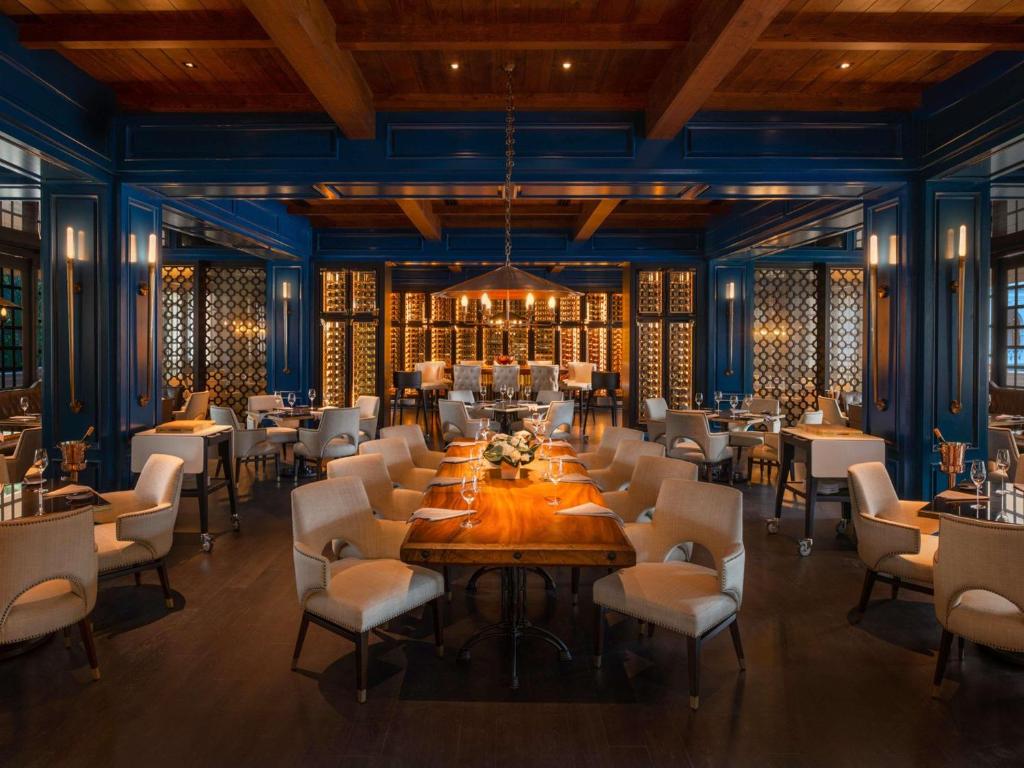
One of the hotel's restored dining rooms